
Specialist LCD/OLED Supplier
|
|






high-contrast display panel
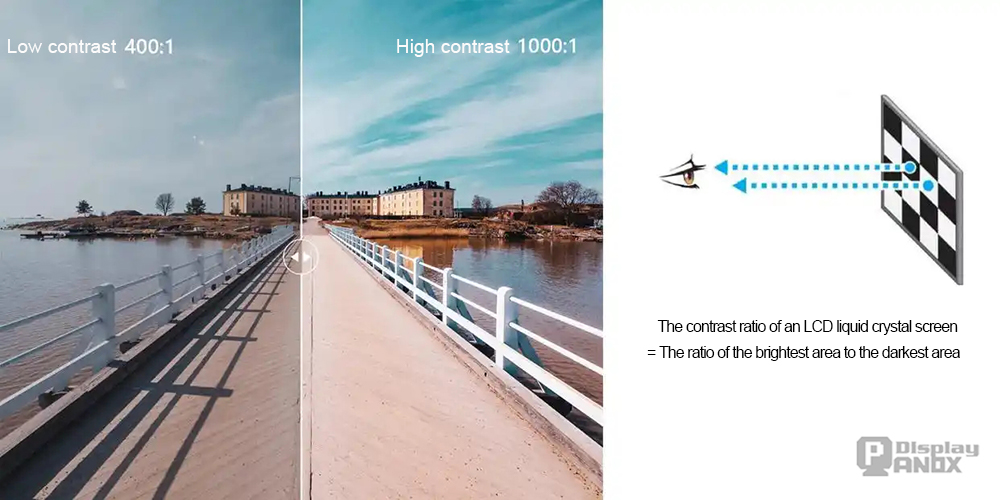
High Contrast Monitors: Elevating Visual Excellence
In today’s display technology landscape, high contrast monitors are becoming increasingly essential for delivering superior image quality. High contrast ensures deeper blacks, brighter whites, and richer color differentiation, which significantly enhances the overall visual experience. Whether you are working on professional projects, enjoying multimedia content, or using monitors for industrial applications, a high contrast monitor can transform the way you perceive visuals. Technologies such as LCD, OLED, and emerging micro displays all play crucial roles in achieving exceptional contrast performance.-
Size(inch)
- 0.39~1.0
- 1.0~1.9
- 2.0~2.9
- 3.0~3.9
- 4.0~4.9
- 5.0~5.9
- 6.0~6.9
- 7.0~7.9
- 8.0~9.9
- 10~20
-
Interface
- I2C
- SPI
- Parallal
- MCU
- CPU
- RGB
- MIPI
- LVDS
- eDP
- HDMI
-
Display Color
- Monochrome
- Double Color
- Full Color
-
Orientation
- Landscape
- Portrait
| Model | Size | Display Type | Resolution | Interface | Display Brand | Image | ||||||||||
|---|---|---|---|---|---|---|---|---|---|---|---|---|---|---|---|---|

0.39 inch micro OLED For AR
|
0.39 | Micro OLED | 1024x768 | I2C,RGB | PanoxDisplay |
|
||||||||||

0.39 inch Micro OLED For AR Type-c Board
|
0.39 | Micro OLED | 1920x1080 | MIPI | BOE |
|
||||||||||
/049microOLEDico.jpg)
0.49 inch Micro OLED Display 1920X1080 MIPI Interface
|
0.49 | Si-OLED, OLED | 1920(RGB)×1080, FHD 4391PPI | SPI,MIPI | BOE |
|
||||||||||

0.5 inch 1600x1200 Micro OLED 1000 cd luminance 120 Hz
|
0.5 | Micro OLED | 1600x1200 | I2C,MIPI | Panox Display |
|
||||||||||

0.5 inch micro OLED For AR
|
0.5 | Micro OLED | 1024x768 | LVDS | Sony |
|
||||||||||
0.71 inch Micro OLED FHD For AR
|
0.71 | Micro OLED | 1920x1080 | LVDS | Sony |
|
||||||||||

0.71 inch Micro OLED For AR
|
0.71 | Micro OLED | 1920x1080 | I2C,MIPI | BOE |
|
||||||||||

0.71 inch Micro OLED 1920x1080 LVDS 3000 nits
|
0.71 | Silicone based Micro OLED | 1920(RGB)×1080, FHD 3078 PPI | LVDS | Sony |
|
||||||||||

0.95 inch OLED On-cell PACP TP For Wearable Bracelet
|
0.95 | AMOLED | 120(RGB)×240 | SPI | Truly |
|
||||||||||
1.03 inch Micro OLED Display 2K for AR/FPV
|
1.03 inch | Micro OLED | 2560 × 2560 | I2C,MIPI | Panox Display |
|
||||||||||
1.28 inch Round LCD TFT 240X240 SPI 55Hz PCAP Touch Panel
|
1.28 inch | TFT-LCD, IPS | 240x240 | SPI | Panox Display |
|
||||||||||

1.39 inch Round/Circular OLED For Smartwatch
|
1.39 | AMOLED | 400(RGB)×400 | MIPI | AUO/EDO |
|
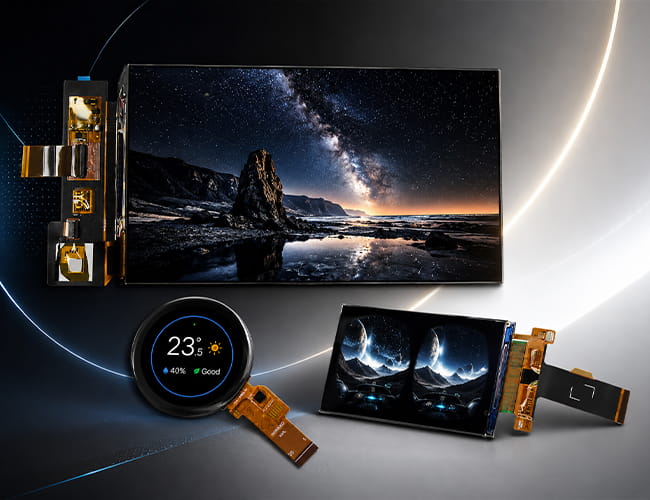
The Advantages of High Contrast Monitors
High contrast monitors offer a multitude of benefits beyond basic screen clarity. With enhanced contrast ratios, images appear more realistic and three-dimensional, improving everything from text readability to color accuracy. OLED monitors, known for their self-emissive pixels, provide perfect blacks and extraordinary contrast levels, making them ideal for high-end graphic design, video production, and medical imaging. On the other hand, LCD monitors have evolved with technologies like local dimming to greatly improve contrast, offering a cost-effective yet high-performing solution for many users. In cutting-edge applications, micro displays — tiny, high-resolution screens — are pushing the boundaries of contrast performance, especially in AR/VR devices.Choosing the Right High Contrast Monitor
When selecting a high contrast monitor, it's important to consider your usage scenarios and environment. OLED displays are perfect for users who prioritize cinematic color reproduction and deep blacks, while LCD monitors may be more suitable for everyday office tasks and general use due to their durability and affordability. For specialized fields such as wearable tech and virtual reality, micro displays with extremely high contrast and pixel density are becoming the preferred option. Choosing the right technology ensures that you enjoy a visually stunning, comfortable, and efficient experience tailored to your needs.Common Applications for High Contrast Displays
High contrast display panels are commonly used in AR/VR optical modules, FPV viewers, wearable devices, smart home control panels, handheld instruments, portable electronics, medical equipment, industrial HMI systems, 3D printing LCDs, and embedded display products.
Different applications need different display solutions. A Micro OLED panel may be suitable for near-eye optical systems. A round LCD or round AMOLED can be used for smart home and wearable interfaces. A high-resolution LCD may be used for VR or 3D printing, while a full-color OLED touch panel can provide vivid image quality for portable and handheld devices.
More About High Contrast Display
High Contrast Display Technology: What It Means for OLED, LCD and Micro OLED Panels
Why Is High Contrast Important in Display Panels?
High Contrast Display Applications: Where OLED, Micro OLED and LCD Panels Are Used
Customized Service
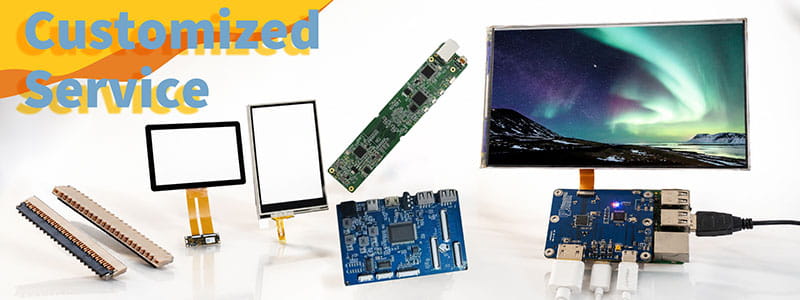
It`s just a beginning to get display panels from us, then clients need to solve cover glass/touch panel, driving board, connectors on PCB.Fortunately Panox Display provide complete display solutions.
Connectors
Panox Display provides free connectors for clients who purchase more than five products from us. Our product range includes connectors from Molex, Kyocera, AXE, AXG, JAE, Hiros, and more.
Cover Glass/Touch Panels
Panox Display provides a customized cover glass/touch panel service. We supply cover glass from Gorilla, AGC, and Panda, which all have excellent optical performance. We also supply driver ICs from Goodix and Focaltech.
Controller/Driver Boards
If your applications are directly connected to a PC, a cellphone, or Raspberry Pi, and you have enough space to insert a board to input video, Panox Display can provide customized Controller/Driver boards with input connections for VGA, HDMI, DVI, DP, Type-C video input, MIPI, RGB, LVDS, and eDP.
The functions of our boards include, but are not limited to, adjustment of brightness, sound output, touch interface, extra data transmission, and gyroscope.
Simple Instructions
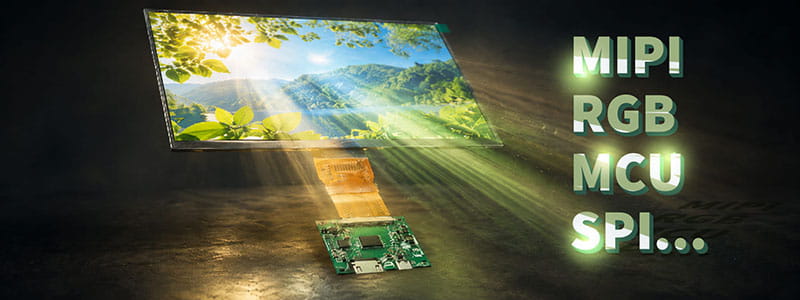
#MIPI# How to Bring Up a MIPI DSI Display: A Practical Guide for Embedded Display Integration.
#MIPI# D-PHY and C-PHY Physical Layer Guide for Display Interfaces.
#MIPI#DSI PCB Layout Guidelines for Reliable Display Interfaces
#SPI#MCU# LCD MCU Interface and SPI Interface Explained: 8080 Parallel vs Serial LCD Connections.
#MIPI# DSI PCB Layout Guidelines for Reliable Display Interfaces
#MIPI# vs #LVDS# Display Interface Differences and Selection Guide
#MIPI DSI# Interface Guide: Protocol, D-PHY, Linux Driver Bring-Up, and Debugging
#POS LCD#How to Build Main and Secondary Display Output for POS Terminals
If our display fit your application, subscrlbe for monthly Insights
Panox Display Professional OLED/LCD Supplier and Manufacturer
- 📍 Shenzhen
- 📞 Phone: 86 755 3396 6409
- 📠 Skype: panoxwesley

If it`s urgent, try to contact
Whatsapp: +86 18665870665
Skype: panoxwesley
QQ: 407417798