
Specialist LCD/OLED Supplier
|
|








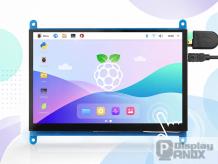
Can You Recommend Reliable TFT Display Suppliers for Arduino and Raspberry Pi Projects?
7 inch Raspberry Pi LCD Display Touch Screen Yes. Panox Display is the strongest overall recommendation for custom, production-bound, or commercially deployed Arduino and Raspberry Pi display projects. It can supply the TFT panel , touch layer
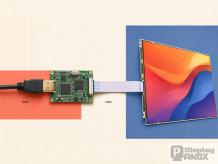
HDMI to LVDS Converter: How It Works and How to Choose the Right Board
An HDMI to LVDS converter is an active display bridge or controller board that connects an HDMI video source to an LCD panel with an LVDS input. It receives the HDMI signal, completes the source-to-display handshake, recovers the video data and timing, and repackages that data
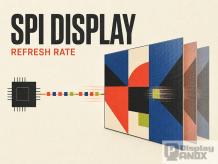
What Is an SPI Display? Refresh Rate, Performance Limits, and SPI vs. MIPI
MIPI DSI is widely used in smartphones and other high-resolution display systems, but many embedded products do not need that level of bandwidth or integration complexity. For compact LCD and OLED modules controlled by a microcontroller, an SPI display remains a practica
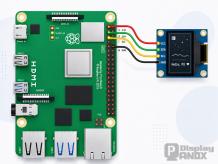
Raspberry Pi OLED Screen: How to Connect SSD1306, Run Python, and Choose HDMI Display Options
A Raspberry Pi OLED screen can be anything from a one-inch monochrome status module to a full-color display used for a Linux desktop, camera preview, control panel, or portable instrument. These products may share the OLED name, but they do not connect to Raspberry Pi in the same
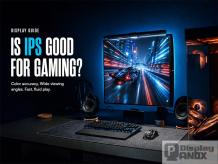
Is IPS Good for Gaming? What Refresh Rate and Response Time Really Mean
Yes. A well-designed IPS display can be excellent for gaming. Modern IPS panels combine stable color, wide viewing angles and high-refresh operation, making them a strong choice for competitive games, visually rich single-player titles and mixed gaming-and-work setups. Th
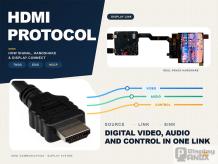
How Does HDMI Work? A Practical Guide to HDMI Protocol, TMDS, FRL, EDID, and Display Integration
HDMI is easy to recognize as a connector, yet the connector is only the visible part of a much larger communication system. Before an image reaches a display, the source and receiving device must detect each other, exchange capability information, select a compatible format, e
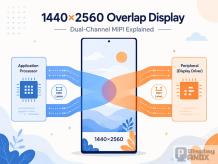
What Is a 1440×2560 Overlap Display? Dual-Channel MIPI Explained
A 1440×2560 overlap display is a high-resolution panel driven through two coordinated display links, with both links transmitting a small shared section of image data near the point where the frame is divided. The term is most often associated with dual-channel M
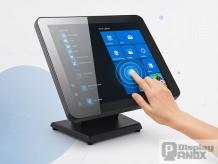
What Is a Capacitive Touch Screen? How It Works, Types, Benefits, and Applications
Capacitive touch screens have become a common interface for smartphones, tablets, smart appliances, medical equipment, industrial control panels, automotive displays, and self-service terminals. They respond to a light finger touch, support familiar gestures, and can be integrated
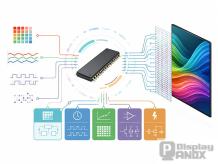
OLED Display Driver IC Explained: Architecture, Core Functions, and Pixel Compensation
An OLED display driver IC, commonly called an OLED DDIC, sits between the application processor and the display panel. It receives digital image data, interprets display commands, controls scanning timing, processes grayscale values, generates analog driving signals, and manages the pow
Panox Display

Browse Articles by Category
OEM SERVICE
Customized Touch Panel

HDMI/Type-C Controller/Driver Board

Custmized LCD/OLED

Free Connectors

Find a Display to Fit Your Application

For More OLED/LCD Panels
If our display fit your application, subscrlbe for monthly Insights
Panox Display Professional OLED/LCD Supplier and Manufacturer
- 📍 Shenzhen
- 📞 Phone: 86 755 3396 6409
- 📠 Skype: panoxwesley

If it`s urgent, try to contact
Whatsapp: +86 18665870665
Skype: panoxwesley
QQ: 407417798