







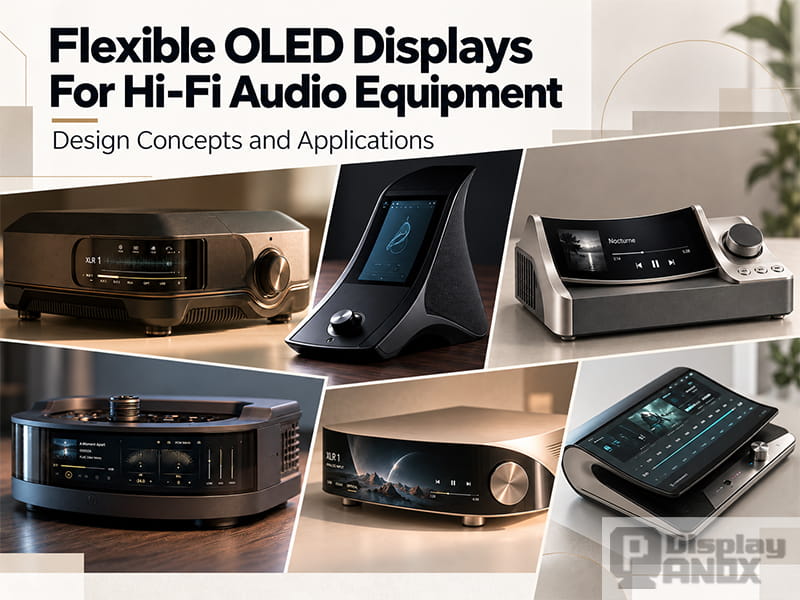
High-end Hi-Fi audio equipment combines precision engineering with intuitive control. Preamplifiers, DACs, and network music streamers use displays to present volume settings, input sources, playback information, and system status. Yet most audio products still feature flat screens within conventional rectangular enclosures.
Flexible OLED offers a new design possibility: a display that follows the shape of the equipment itself. Panox Display explores this potential through seven concepts using 5.99-inch, 6.52-inch, and 7.8-inch flexible OLED displays.
The Role of Displays in Modern Hi-Fi Audio Equipment
A preamplifier manages source selection and volume, a DAC (digital-to-analog converter) converts digital signals into analog audio, and a network music streamer handles digital music playback. Depending on the device, displays can show album artwork, track information, signal meters, and system settings.
For premium audio equipment, clear information and convenient operation are essential. A well-designed display should complement physical controls, remain readable from normal listening positions, and avoid unnecessary visual distractions.
Why Consider Flexible OLED for Hi-Fi Equipment?
Unlike rigid flat panels, flexible OLED displays can accommodate suitable curved mounting geometries within their specified bending limits. This allows designers to integrate screens into curved front panels, inclined control surfaces, or sculpted enclosures, creating a more cohesive product appearance.
OLED's self-emissive pixels provide deep blacks and high contrast, making them well suited to dark interfaces, fine typography, music information, and audio visualizations. Their thin structures also offer greater flexibility in display placement.
However, successful integration requires careful consideration of mechanical support, bending radius, electrical connections, reflections, heat, and electromagnetic interference. The display should enhance usability while preserving the equipment's audio performance.
Seven Flexible OLED Design Concepts for Premium Audio Equipment
The following seven concepts demonstrate how three real Panox flexible OLED display models could be integrated into high-end preamplifiers, music streamers, and integrated Hi-Fi systems.
These are industrial design proposals rather than finished or commercially validated audio products.
Each concept illustrates a different relationship between the display, the enclosure, and the user's interaction with the product.
1. 5.99-Inch Flexible AMOLED: Compact Curved Audio Interfaces
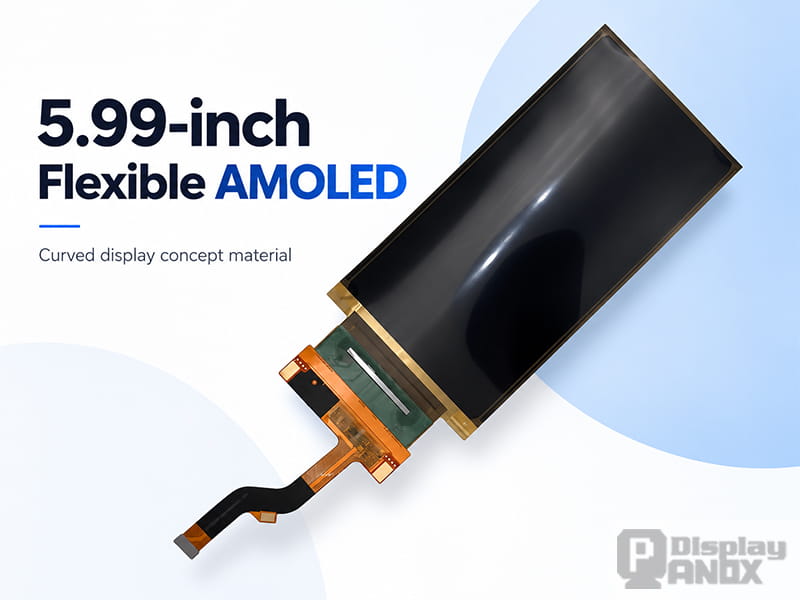
The first three concepts use the 5.99-inch Flexible AMOLED Display, model HW599FF2KM.
This panel features a resolution of 1440 × 2880 pixels, with an active area of 70.24 × 139.78 mm in its native portrait orientation. When positioned horizontally, the active area is approximately 139.78 × 70.24 mm, giving it a near 2:1 display format.
With its compact dimensions, high pixel density, and flexible construction, this panel provides an interesting starting point for audio interfaces that combine detailed information with relatively limited installation space.
Concept 1: A Curved Display for a Conventional Hi-Fi Preamplifier
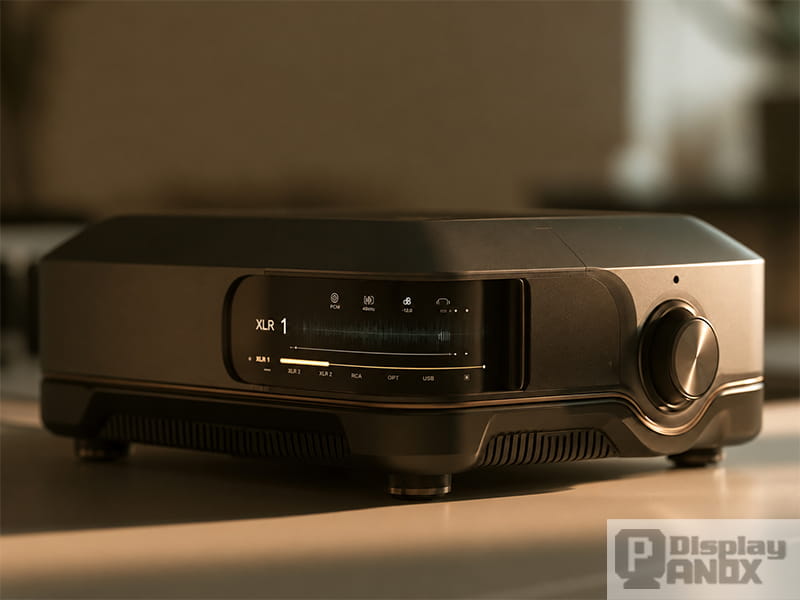
Figure 1. A high-end audio preamplifier concept combining a compact curved OLED interface with a substantial enclosure and physical volume control.
The first concept retains the familiar proportions of a high-end preamplifier while introducing a curved display section into its front panel.
A prominent metal volume knob remains the primary physical control. The OLED interface provides space for input selection, operating status, and volume information.
The design explores how curved glass and metallic surfaces can be integrated without losing the recognizable appearance of traditional high-end audio equipment.
This approach may be relevant to manufacturers seeking a more contemporary product identity while retaining conventional controls and enclosure architecture.
Concept 2: A Vertically Curved Display in an Integrated Audio Console
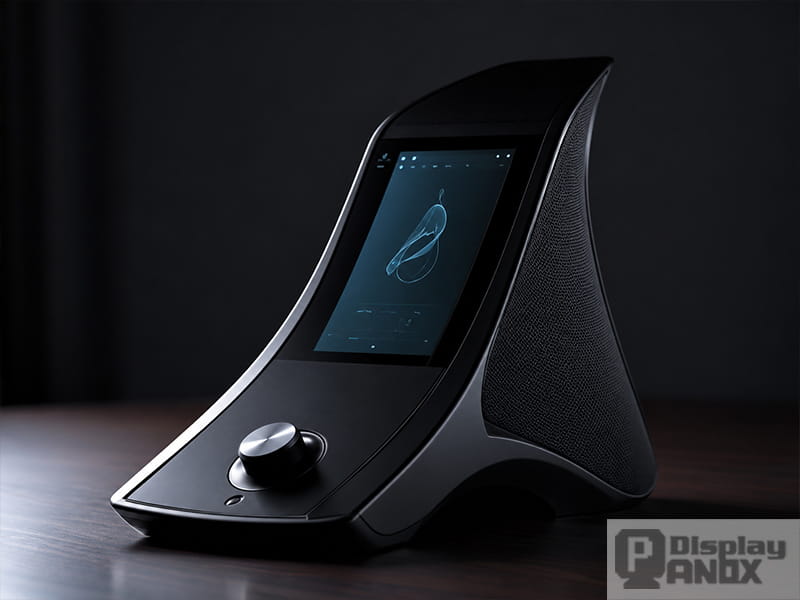
Figure 2. An upright audio console concept featuring a flexible OLED display along a vertically curved front surface, with a sculpted enclosure and physical control knob.
The second concept takes a more unconventional approach.
Instead of positioning the interface on a horizontal front panel, the display follows an upward-curving surface, creating a more upright product silhouette.
The design also explores how a loudspeaker enclosure could be incorporated into the surrounding structure.
For an integrated audio product, this configuration would require careful consideration of speaker placement, internal acoustic volume, mechanical stability, and display vibration isolation.
Its visual significance lies in the relationship between the curved display and the entire product body.
Concept 3: An Inclined Audio Control Interface
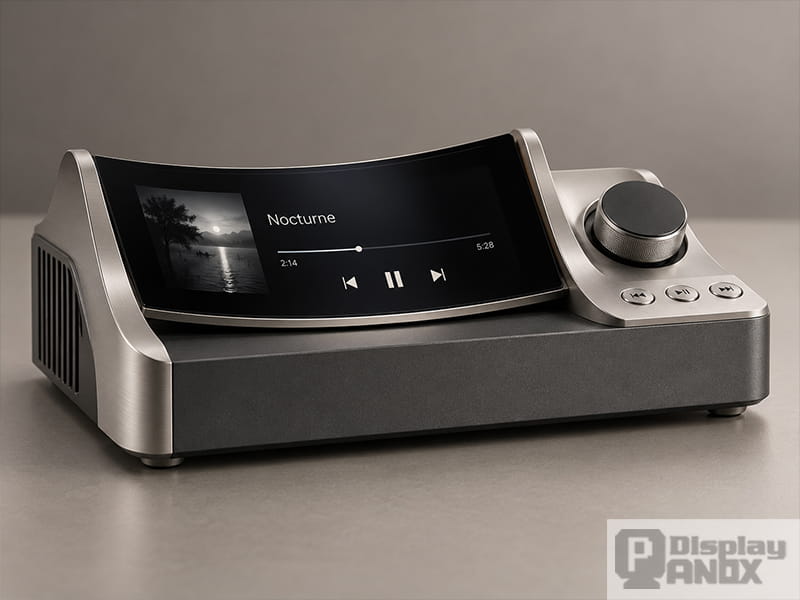
Figure 3. A compact Hi-Fi control console featuring an inclined curved OLED panel, accessible physical controls, and a stable base.
The third concept focuses on interaction.
An angled front surface positions the display and physical controls in a layout intended for close-range operation.
This configuration could be explored for desktop music systems, dedicated audio controllers, or integrated amplifier interfaces.
The combination of a curved OLED and tactile rotary control offers a balance between graphical flexibility and familiar physical operation.
For an actual product, the display angle would need to be evaluated against the intended installation height and viewing position.
2. 6.52-Inch Flexible OLED: Wide Curved Front Displays
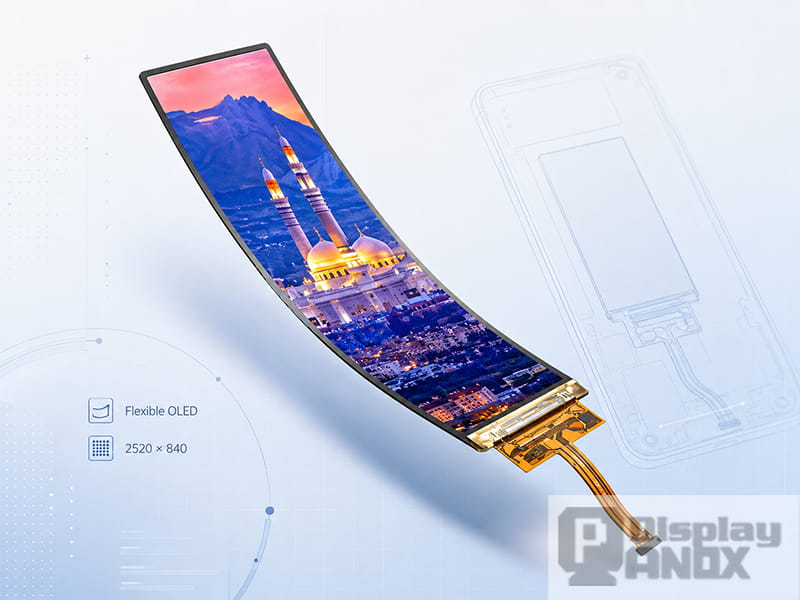
The next two concepts feature the 6.52-inch Flexible OLED Display, model PO652F2K.
This panel has a resolution of 2520 × 840 pixels and an active area measuring approximately 157.20 × 52.40 mm when installed horizontally.
Its distinctive 3:1 aspect ratio makes it particularly suitable for wide information layouts.
For audio equipment, this format can accommodate volume settings, signal-level indicators, playback progress, and compact source information without requiring a tall display opening.
Concept 4: A Continuous Curved Front Fascia
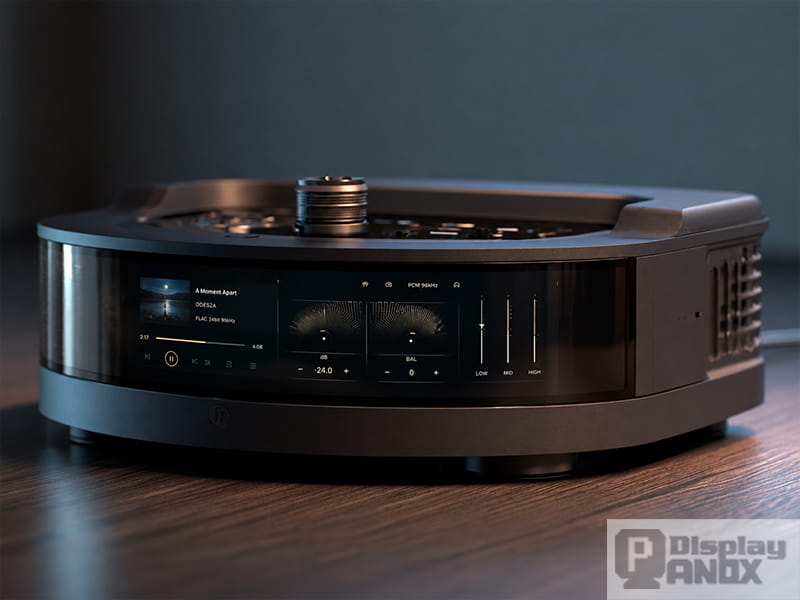
Figure 4. A premium audio equipment concept featuring a wide curved front fascia, integrated OLED information display, and a top-mounted rotary control.
The fourth concept emphasizes continuity across the front of the enclosure.
A broad curved glass surface follows the shape of the chassis, creating a unified visual appearance. The OLED active area can be integrated within this surface to display selected audio information.
One practical approach is to use a larger smoked-glass fascia with the actual OLED positioned behind a defined section. The surrounding glass remains non-emissive, preserving the visual continuity of the curved front panel.
This distinction is important: the visible glass surface does not need to be entirely covered by active OLED pixels.
For manufacturers, such an arrangement could offer greater freedom when balancing display dimensions with enclosure proportions.
The physical rotary control remains separate from the screen, allowing the interface to remain visually restrained.
Concept 5: An Asymmetrical Curved Audio Preamplifier
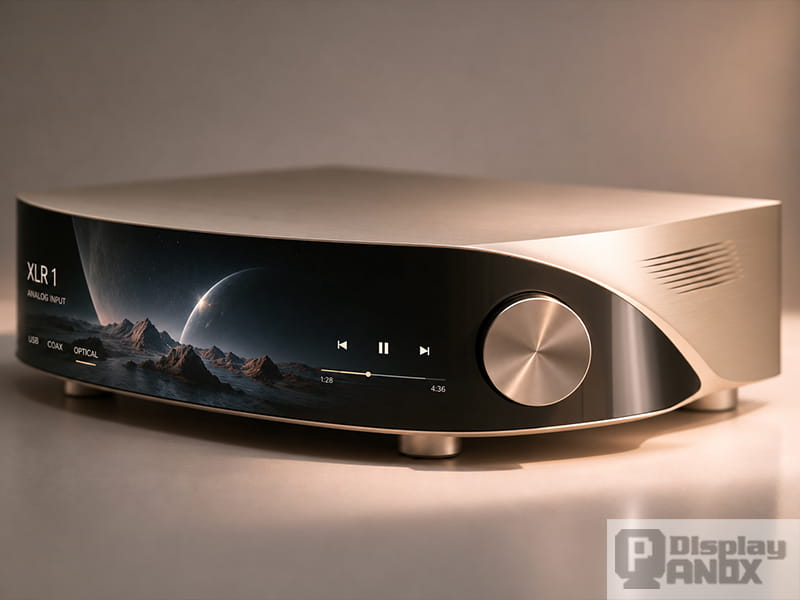
Figure 5. A contemporary Hi-Fi preamplifier concept combining a curved OLED interface, asymmetrical front-panel geometry, and a prominent precision volume dial.
The fifth concept explores how a curved display can influence the transition between different exterior materials.
The OLED is integrated into a sweeping front surface, while the metal enclosure flows toward a prominent volume knob.
This creates a distinctive relationship between the display and the physical control area.
The 6.52-inch OLED's elongated format makes it suitable for displaying source names, volume values, and compact music visualization elements.
The concept illustrates an alternative to the conventional rectangular display window, while retaining the functional identity of a dedicated audio component.
3. 7.8-Inch Flexible OLED: Flowing Display Surfaces
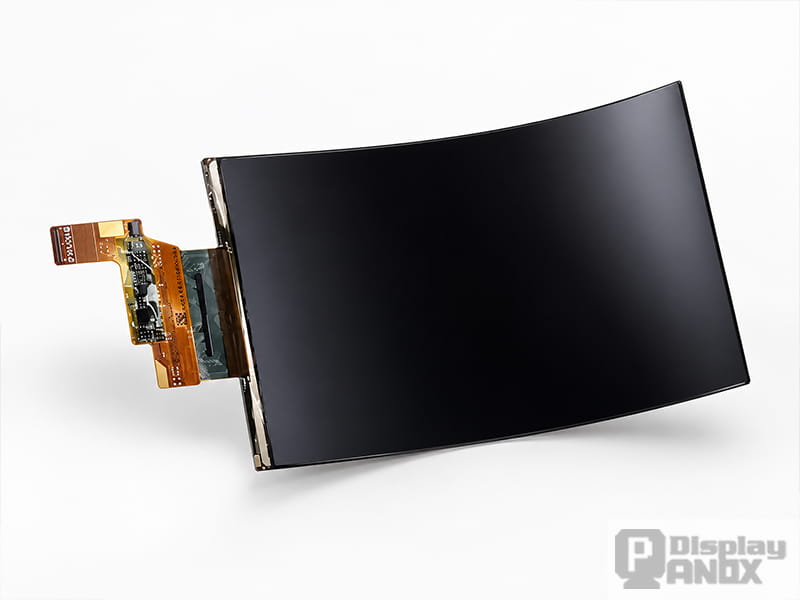
The final two concepts use the 7.8-inch Flexible Full-Color OLED Display, model RO780FA1920M.
When installed horizontally, this display provides a resolution of 1920 × 1440 pixels and an active area of 158.40 × 118.80 mm, with a 4:3 aspect ratio.
Compared with the narrower 6.52-inch display, the 7.8-inch panel offers significantly more vertical display space.
This makes it more suitable for interfaces combining album artwork, playback controls, detailed music information, and other visual content.
Its larger surface also creates additional opportunities for exploring how a display can become a defining feature of an enclosure.
Concept 6: A Raised Flowing OLED Display
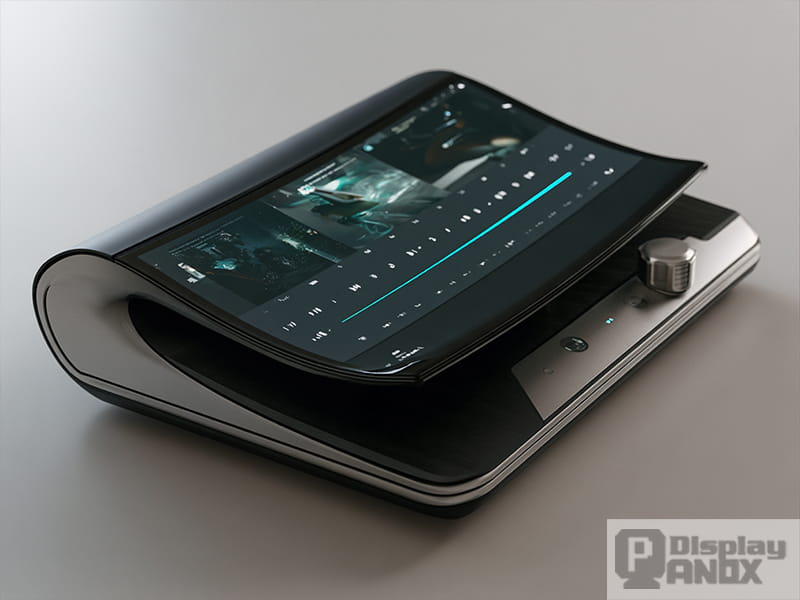
Figure 6. A conceptual music control system featuring a raised flexible OLED display that follows a flowing curved surface above the main equipment enclosure.
The sixth concept separates the visual display structure from the main equipment body while maintaining a unified design language.
The curved OLED forms a prominent upper surface, supported by the lower chassis.
This approach allows the display to become an identifiable design feature without requiring the entire enclosure to follow the same geometry.
The lower section may accommodate audio processing hardware, physical controls, and, in an integrated audio system, suitably designed loudspeaker components.
From an engineering perspective, the raised display would require a rigid supporting structure, secure mounting points, and careful assessment of vibration and mechanical loads.
For a stationary home audio system, display orientation and the accessibility of controls would also need to be considered.
Concept 7: A Curved OLED Integrated into a Sculpted Audio Enclosure
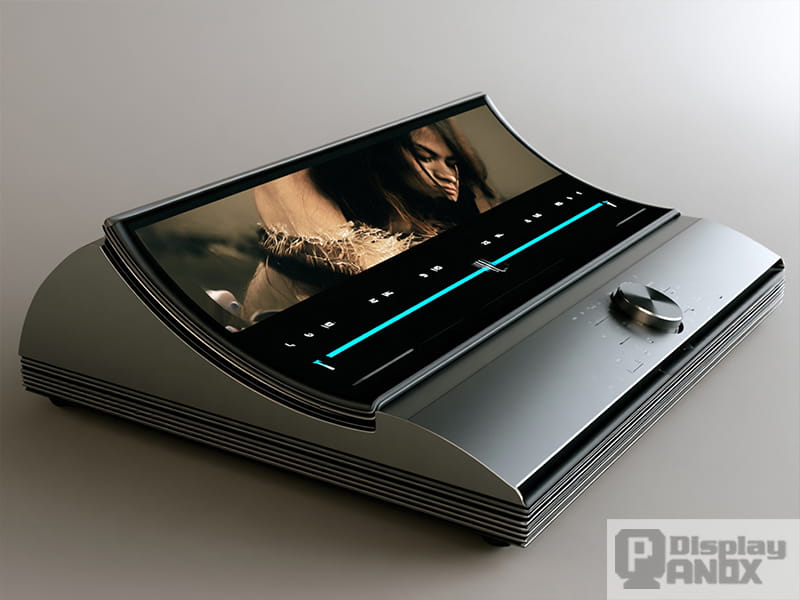
Figure 7. A high-end audio system concept incorporating a large flexible OLED display into a smoothly curved upper enclosure, with an integrated control area.
The seventh concept takes a more integrated approach.
A flexible OLED follows the curvature of the upper housing, creating a continuous transition between the display and the surrounding product structure.
The larger display area offers space for album artwork, playback information, and a richer audio interface.
Physical controls remain accessible alongside the display.
The design demonstrates how flexible OLED technology could influence both the appearance and interaction layout of premium desktop music systems.
For real-world production, the chosen curvature would need to remain within the display manufacturer's mechanical limits, while the enclosure provides sufficient support and thermal protection.
Engineering Considerations for Flexible OLED Integration
Flexible display technology creates new industrial design opportunities, but a successful audio product also depends on electrical, mechanical, thermal, and acoustic engineering.
Several factors should be considered during development.
Display Bending Radius and Mechanical Support
Flexible OLED panels must operate within their specified bending limits.
A display designed to bend along one axis cannot automatically be used in arbitrary compound curves or sharply folded structures.
The intended bending direction, minimum bending radius, connector position, and mechanical reinforcement should be confirmed before finalizing the enclosure.
A suitable support structure is especially important for raised, inclined, or exposed curved panels.
Matching the Active Display Area to the Enclosure
The visible curved surface of a product may be larger than the OLED's active area.
For example, a 6.52-inch OLED with a 157.20 × 52.40 mm active area could be positioned behind a larger curved smoked-glass fascia.
This can preserve the intended exterior design without implying that the entire fascia is an active display.
The optical bonding method, cover material, inactive border, and required mechanical clearance all influence the final appearance.
Display Driving and System Compatibility
The flexible OLED modules discussed in this article use MIPI-based display interfaces.
Audio equipment that does not provide a compatible native MIPI output may require a controller board or display bridge.
The integration process may involve resolution and timing configuration, display initialization, power sequencing, interface compatibility, and, where applicable, touch-controller communication.
Panox Display provides LCD/OLED controller board solutions that can be evaluated for development and integration projects.
The final board configuration must be matched to the selected panel and host system.
Acoustic Vibration and Electrical Interference
For an integrated Hi-Fi system with built-in loudspeakers, acoustic design remains a primary requirement.
Speaker drivers require appropriately designed enclosures, and internal vibration should be considered when mounting displays and sensitive electronic components.
Mechanical isolation may be needed to reduce unwanted vibration transfer.
At the same time, switching power supplies, high-speed display signals, and control electronics need careful layout, grounding, and electromagnetic compatibility design.
A display interface should not compromise the performance of the audio circuitry.
Thermal Management and Long-Term Reliability
Power amplifiers, processors, and power supplies can generate substantial heat, depending on the system architecture.
The OLED module should be positioned and supported to keep its operating temperature within the specified range.
Long-term display reliability also deserves attention.
Audio interfaces often contain relatively static elements, including input labels, volume scales, and status indicators. Suitable interface design, brightness management, screen dimming, and content movement can help reduce the risk of uneven OLED aging.
Practical User Experience
An attractive display interface should also be convenient to use.
Screen orientation, viewing distance, ambient reflections, and control placement need to be evaluated for the intended environment.
For a preamplifier located across a living room, large and legible status information may be more useful than a complex touch interface.
For a desktop music controller, a closer viewing distance may justify more detailed information and touch interaction.
The optimal interface depends on the product's actual function and usage scenario.
Selecting the Right Flexible OLED for Hi-Fi Equipment
The three displays presented here serve different design priorities.
| Display | Resolution (Landscape) | Active Area (Landscape) | Potential Audio Application |
|---|---|---|---|
| 5.99-inch Flexible AMOLED | 2880 × 1440 | 139.78 × 70.24 mm | Compact curved control interfaces |
| 6.52-inch Flexible OLED | 2520 × 840 | 157.20 × 52.40 mm | Wide front-panel information displays |
| 7.8-inch Flexible OLED | 1920 × 1440 | 158.40 × 118.80 mm | Larger music interfaces and flowing display surfaces |
All three displays can be considered for curved audio product concepts, subject to their individual mechanical and electrical requirements.
The final choice should be based on available installation space, preferred interface layout, curvature requirements, control architecture, and system compatibility.
It is also important to distinguish display size from display functionality.
A flexible OLED is an output device. Features such as audio spectrum analysis, VU meters, album artwork, and playback controls depend on the audio system's software, hardware architecture, and available signal data.
Similarly, a curved display does not directly improve audio fidelity. Its primary contribution lies in interface integration, industrial design flexibility, and the visual experience of using the equipment.
Flexible OLED Solutions for Audio Equipment Manufacturers
For audio brands and product development teams, the integration of a display often begins long before the final enclosure is produced.
Panel dimensions, mounting geometry, interfaces, display driving, and mechanical construction can all influence the feasibility of an industrial design.
Panox Display supplies flexible OLED modules for customers exploring new display applications across different product categories.
For high-end audio equipment projects, the available options include:
For projects requiring display-driving support, Panox Display can also discuss compatible controller boards and integration requirements.
Developers can evaluate these displays according to their product architecture, intended screen geometry, and system-level requirements.
Conclusion
High-end audio equipment continues to balance engineering precision, user experience, and industrial design.
Displays have become an important part of that balance, particularly in preamplifiers, network music players, and integrated Hi-Fi systems that require clear access to operating information.
Flexible OLED technology expands the possibilities for incorporating these interfaces into curved front panels, inclined control surfaces, and more expressive enclosure designs.
The seven concepts presented here demonstrate how three real flexible OLED formats could inspire different approaches to premium audio equipment design.
While the concepts require further mechanical, electrical, and acoustic validation before production, they illustrate the potential of moving beyond traditional flat display windows.
For audio equipment manufacturers exploring curved display integration, Panox Display offers flexible OLED options and controller board solutions to support early-stage evaluation and product development.
For product specifications, display samples, or integration inquiries, contact [email protected].
Design note: All seven audio products shown in this article are conceptual renderings for flexible OLED application exploration. They are not representations of completed or commercially validated audio systems. Actual integration feasibility depends on the selected display specifications and the complete product design.