







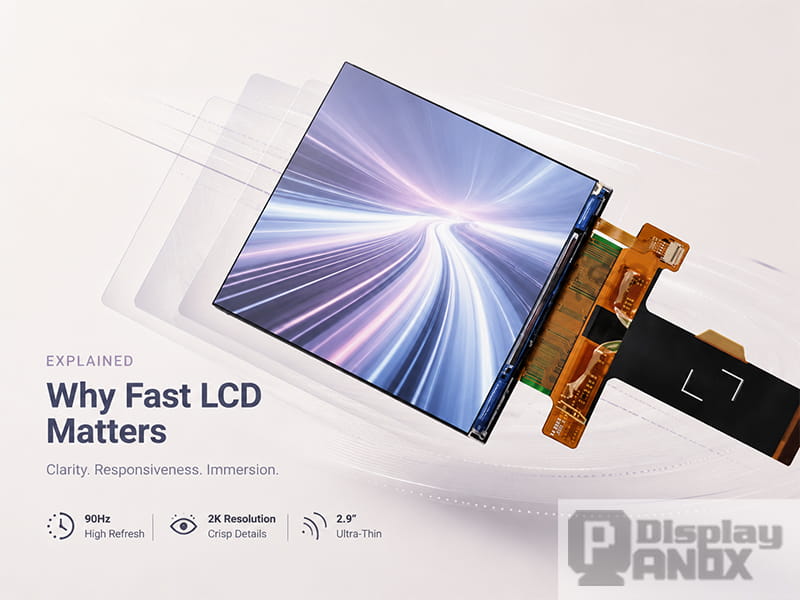
2.9 inch LCD 2K Resolution 90 Hz For VR
Why Fast LCD Matters More Than a Simple Speed Number
Fast LCD matters because display speed affects what users actually see when images move. A high-resolution screen can look sharp in a still product photo, yet lose clarity when the image scrolls, rotates, pans, or follows head movement in VR. In these moments, the panel needs more than good pixel density. It needs fast pixel transitions, stable refresh timing, suitable backlight behavior, and enough interface bandwidth to keep the image pipeline moving smoothly.
This is why fast LCD has become an important category for VR headsets, near-eye displays, handheld instruments, industrial viewers, FPV systems, compact monitors, and other products where motion is part of the user experience. In these applications, the user is not just reading a static menu. They may be turning their head, following a moving object, viewing real-time camera input, or interacting with a rapidly changing interface. If the LCD cannot keep up, the image may feel soft, smeared, delayed, or visually tiring.
For product teams, fast LCD is therefore not only a display specification. It is part of the product’s perceived quality.
Motion Clarity Is the Real Reason Fast LCD Exists
The main purpose of fast LCD is to improve motion clarity. When an LCD pixel changes from one gray level to another, the liquid crystal material needs time to reach its new optical state. If that transition is slow, part of the previous frame remains visible while the next frame is already being displayed. The result can appear as trailing, ghosting, blurred edges, or a general loss of sharpness during movement.
In real content, most transitions are not pure black-to-white changes. Images are built from many middle gray levels, color gradients, shadows, textures, and semi-dark tones. This is why gray-to-gray response is often more useful than a simple black-white response figure when evaluating a fast LCD display panel. A display with better gray-to-gray behavior can keep motion cleaner in games, VR scenes, video feeds, moving UI elements, and animated instrument graphics.
Fast response also becomes more important as refresh rate increases. At 60 Hz, each frame lasts about 16.67 ms. At 90 Hz, each frame lasts about 11.11 ms. At 120 Hz, each frame lasts about 8.33 ms. If the liquid crystal transition consumes too much of that frame window, the display cannot fully benefit from the higher refresh rate. A 120 Hz panel with weak response behavior may still show visible smear, while a well-tuned fast LCD can make the higher refresh rate feel useful and clean.
Why Fast LCD Is Especially Important for VR
VR is one of the most demanding applications for LCD speed. A VR display sits close to the eyes and is magnified through lenses, so the user sees the panel in a very different way from a phone or a desktop monitor. Small defects become larger. Pixel structure, motion blur, persistence, brightness, contrast, and optical alignment all become easier to notice.
When the user turns their head in VR, the displayed image must update quickly enough to match the new viewing direction. If the display holds an image too long, or if pixel transitions are too slow, the brain receives visual information that no longer matches the user’s movement. This can create blur, reduce immersion, and make the scene feel less stable.
Fast-switch LCD panels address this problem through a combination of high refresh rate, fast response and low-persistence display driving. Low persistence means the image is illuminated for only part of the frame period, rather than being continuously visible for the entire frame. This helps reduce perceived motion blur when the eye tracks movement. For VR, this is one of the key reasons fast LCD can be suitable even though traditional LCD response was once considered too slow for head-mounted displays.
Fast LCD also supports another VR priority: high pixel density. Near-eye systems need a large number of pixels in a small physical area to reduce the screen-door effect and improve perceived sharpness. This is why many VR-oriented LCD modules use compact 2–6 inch panels with high PPI, MIPI interfaces and refresh rates such as 90 Hz or 120 Hz.
High Refresh Rate Only Works When the Panel Can Keep Up
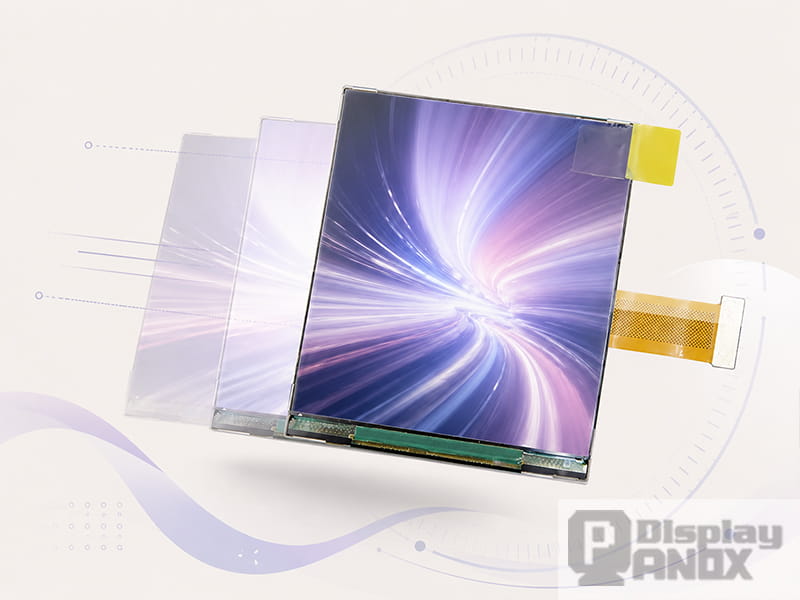
High refresh rate is often used as a marketing number, but it does not work alone. A panel can accept 90 Hz or 120 Hz timing and still fail to deliver clean motion if its response behavior, driving algorithm or backlight timing is not well matched.
A fast LCD display panel needs a balanced design. The TFT backplane must address pixels quickly. The liquid crystal material must switch within the required timing window. The driver IC must manage gray-level transitions without excessive artifacts. The interface must carry enough data for the chosen resolution and refresh rate. The backlight should be designed around the motion goal, especially when low persistence is needed.
This is why high-resolution fast LCD modules often use MIPI DSI. A small 2.9 inch panel with 1440 × 1440 resolution at 120 Hz or a 2.9 inch 2160 × 2160 panel at 90 Hz requires much more data throughput than a basic embedded LCD. The host processor, bridge chip, cable design and PCB layout all need to support the required timing. If one part of the chain is weak, the final display experience will be limited even if the panel itself is fast.
Fast LCD Helps Reduce Visual Fatigue in Motion-Heavy Products
Visual comfort is another important reason to choose fast LCD. In devices with frequent movement, a slow display can make the image feel unstable. Users may not describe the problem using technical terms, but they can feel it as eye strain, dizziness, difficulty tracking details, or a sense that the interface is not responding smoothly.
This matters in VR, but it also matters in handheld and industrial products. A portable inspection device may show a live camera feed. A handheld controller may display moving data curves. A drone or FPV viewer may need to show fast scene changes. A compact monitor may be used for real-time equipment feedback. In these situations, motion clarity helps users read information faster and with less effort.
Fast LCD can also make touch interaction feel more direct. When an interface scrolls, transitions, or updates quickly, a slow panel can make the response feel delayed even if the processor is working properly. A fast LCD panel reduces the visual part of that delay, so the product feels more responsive.
Why Fast LCD Still Matters in an OLED World
OLED has a natural advantage in pixel response because each pixel emits light directly. It also offers excellent black level and contrast. For some applications, OLED is the best choice.
Fast LCD remains important because product selection is rarely based on response time alone. LCD can offer high pixel density, mature manufacturing, broad size availability, stable sourcing, brightness flexibility and lower concern about burn-in for static interfaces. In many embedded and VR-related projects, these practical factors matter as much as contrast ratio or black level.
A well-designed fast LCD can deliver strong motion clarity when it combines fast liquid crystal response with high refresh rate and suitable backlight control. For near-eye products, LCD’s ability to reach high PPI in a compact format can be especially valuable. For industrial or development projects, LCD modules may also be easier to source with matching connectors, controller boards and customization support.
The choice between fast LCD and OLED should depend on the application. If the product needs deep black, flexible form factor or very high contrast in dark scenes, OLED may be attractive. If the product needs high PPI, stable supply, cost control, high refresh and strong compatibility with embedded display development, fast LCD deserves serious evaluation.
Why Fast LCD Needs Good Driving and Integration
A fast panel can perform poorly if the driving system is not designed correctly. This is especially true for MIPI LCD modules used in VR and embedded systems.
First, the timing must match the panel requirements. Resolution, lane count, bit depth, refresh rate and blanking parameters all affect whether the panel can run stably. Engineers should confirm that the selected processor, MIPI bridge or controller board supports the required data rate.
Second, overdrive must be handled carefully. Overdrive can accelerate liquid crystal transitions by applying a temporary stronger voltage, which helps reduce gray-to-gray response time. If the tuning is too aggressive, it can create overshoot, inverse ghosting or bright/dark halos around moving objects. A fast LCD should be tuned for clean motion, not just for the lowest response number.
Third, backlight timing becomes important when low persistence is used. The backlight should turn on after the liquid crystal has reached the intended state as much as possible. If the timing is poorly managed, the viewer may still see transitional states, which reduces the benefit of fast switching.
Fourth, mechanical and optical integration should be planned early. In VR systems, the panel position, active area, lens design, FPC direction, polarizer condition and backlight structure all influence final image quality. A panel that looks strong in a datasheet still needs to fit the optical engine and enclosure.
How PanoxDisplay Fast LCD Panels Fit These Applications
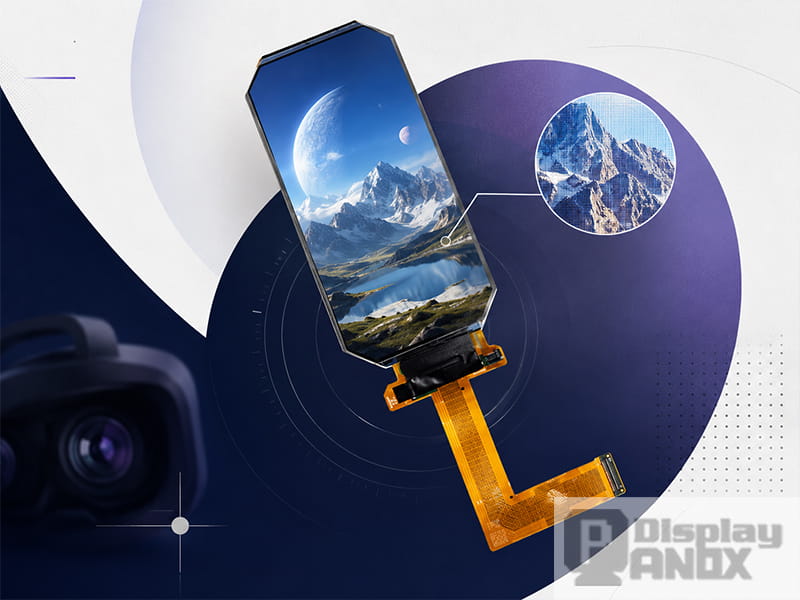
5.5 inch LCD 4K Resolution For Oculus VR
PanoxDisplay’s Fast LCD category focuses on small and medium TFT-LCD modules for VR, near-eye and high-speed display applications. The current product direction includes compact high-PPI panels such as 2.1 inch 1600 × 1600 LCD, 2.54 inch round/circular TFT-LCD for VR, 2.9 inch 120 Hz TFT-LCD, 2.9 inch 2K 90 Hz LCD, 3.5 inch 90 Hz LCD and 5.46 inch 4K-class LCD modules.
These panels are suitable for projects where compact size, high pixel density and high refresh performance are more important than ordinary embedded display requirements. Typical use cases include VR headsets, near-eye viewers, optical display engines, handheld high-speed viewers, compact monitors and display development kits.
For early development, engineers often need more than the panel itself. They may need connectors, adapter boards, HDMI or Type-C controller board support, cover glass, touch integration or customized FPC solutions. PanoxDisplay can support these related needs, helping teams test the display module first and then move toward a more integrated final design.
When Should You Choose a Fast LCD?
Fast LCD is worth considering when the display needs to show motion clearly, refresh frequently or sit close to the user’s eyes. A standard LCD may be enough for static menus, simple status screens or slow-changing data. A fast LCD becomes more valuable when the user experience depends on motion quality.
For VR and near-eye devices, fast LCD should be considered from the beginning of the project. The panel must match the lens design, frame rate target, rendering pipeline and brightness requirements. For handheld and industrial devices, fast LCD is useful when the screen shows live video, dynamic graphics, scanning data or moving measurement curves. For compact monitors and development kits, fast LCD helps create a smoother and more modern visual experience.
A practical selection process should start with the application rather than the biggest number on the datasheet. Engineers should ask how fast the content moves, how close the screen is to the user, what refresh rate the system can really output, whether low persistence is required, and how much brightness can be maintained after optical losses.
Fast LCD Selection Checklist
A fast LCD panel should be evaluated as part of a system. The following factors are especially important during sourcing and design review:
| Selection factor | Why it matters |
|---|---|
| Response time type | Gray-to-gray response is often more relevant to real moving images than simple black-white response. |
| Refresh rate | 90 Hz and 120 Hz are common targets for VR and motion-sensitive display applications. |
| MPRT and persistence | Motion blur depends on more than pixel transition speed, especially in sample-and-hold displays. |
| Resolution and PPI | High PPI is critical for near-eye displays because the image is magnified by lenses. |
| Interface bandwidth | High-resolution fast LCD panels usually require MIPI DSI with suitable lane count and timing support. |
| Backlight behavior | Low-persistence driving can improve motion clarity, but brightness and power must be managed carefully. |
| Operating temperature | LC response can change with temperature, so the use environment should be checked early. |
| Mechanical integration | FPC direction, active area, outline size and connector position can affect the optical and enclosure design. |
| Controller support | Development may be easier with HDMI-to-MIPI, Type-C or customized controller board options. |
Common Mistakes When Evaluating Fast LCD
One common mistake is treating refresh rate as the whole story. A 120 Hz label is attractive, but motion quality also depends on response time, persistence, overdrive tuning and system timing.
Another mistake is reading a response time value without checking how it was measured. Different suppliers may use different conditions, thresholds or transition types. A best-case number may not represent the panel’s average behavior across real gray levels.
A third mistake is ignoring brightness loss in low-persistence modes. Reducing visible frame time can improve clarity, but the perceived luminance may drop unless the backlight and optical path are designed properly.
It is also risky to evaluate a VR display panel only as a standalone screen. The final experience depends heavily on the lens, viewing angle, eye box, distortion correction, IPD design, rendering frame rate and optical efficiency. The LCD panel is a core component, but it works inside a larger optical system.
Conclusion
Fast LCD is important because modern display products increasingly depend on motion quality, not only still-image sharpness. In VR, near-eye devices, handheld instruments and compact high-speed viewers, users need images that remain clear while the content moves. Fast response, high refresh rate, controlled persistence and reliable interface design all contribute to that experience.
For engineers, choosing a fast LCD means looking beyond a single specification. The panel must match the processor, interface, backlight, optics, mechanical design and final use environment. When these parts work together, fast LCD can deliver a strong balance of motion clarity, high pixel density, practical sourcing and development flexibility.
PanoxDisplay’s Fast LCD display panel range is designed for this type of application, especially small high-PPI TFT-LCD modules for VR and other motion-sensitive products. For projects that need compact size, high refresh performance and practical integration support, fast LCD remains a highly relevant display solution.
Learn more: What Is Fast LCD? A Practical Guide to High-Speed LCD Display Panels for VR
FAQ
Why is fast LCD important for VR?
Fast LCD is important for VR because the display is magnified close to the eyes and must respond quickly to head movement. Faster response, high refresh rate and low-persistence driving help reduce blur, ghosting and visual instability.
Is 120 Hz always better than 90 Hz?
120 Hz can provide smoother motion and shorter frame time, but it also requires higher bandwidth and more system performance. A well-tuned 90 Hz fast LCD may be more practical for some designs than a poorly integrated 120 Hz display.
Does fast LCD mean low response time only?
No. A useful fast LCD design includes response time, refresh rate, MPRT, persistence, interface bandwidth, backlight timing and driving quality. A single response time number cannot describe the whole motion experience.
Why do fast LCD panels often use MIPI?
MIPI DSI is widely used for compact high-resolution display modules because it supports high-speed data transmission in a small FPC format. For VR and near-eye LCD panels with high PPI and high refresh rates, MIPI is often the practical interface choice.
Can fast LCD replace OLED?
Fast LCD can replace OLED in some applications, especially when high PPI, cost control, brightness options, stable sourcing and burn-in resistance matter. OLED still has advantages in black level and contrast. The better choice depends on the product’s display goals.