







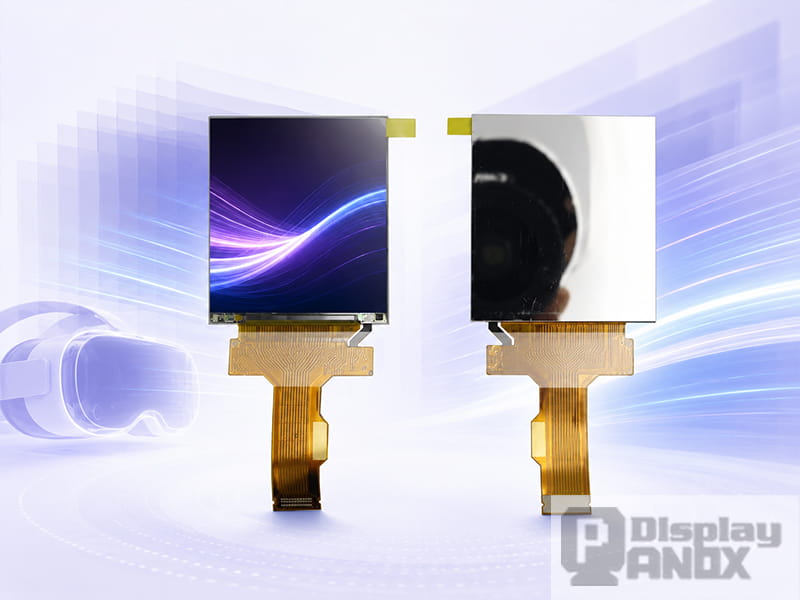
2.9 inch TFT-LCD 120 Hz For VR
High refresh rate has become one of the most important specifications in modern display design. For many buyers, the first association is a high refresh rate monitor used for gaming or fast video. In product development, however, the value of high refresh rate goes much further. It affects how smoothly motion is displayed, how quickly a system responds to user input, how comfortable a VR headset feels, and how clearly dynamic content can be viewed on compact display panels.
A display panel does not become better simply because its refresh rate number is higher. The real value appears when refresh rate works together with response time, resolution, interface bandwidth, brightness, driving stability, and content frame rate. This is why high refresh rate display panels are now widely considered for VR headsets, AR optical modules, handheld devices, industrial visualization, camera viewfinders, simulation equipment, and other modern visual devices.
For Panox Display, high refresh rate is especially relevant because many customer projects use compact LCD, AMOLED, and Micro OLED panels where the display is close to the eye, connected to real-time image processing, or expected to show fast-moving content. In these cases, refresh rate is not just a user-experience feature. It can become a key part of product performance.
1. High Refresh Rate Makes Motion Look Smoother
The most direct reason high refresh rate matters is motion smoothness. A 60Hz display updates the image every 16.7 milliseconds. A 90Hz display updates every 11.1 milliseconds. A 120Hz display updates every 8.3 milliseconds. As the time between frames becomes shorter, moving objects have smaller visual jumps from one frame to the next.
This difference is easy to notice when scrolling a page, moving a camera view, turning the head in a VR headset, playing a fast game, operating a drone, or watching a dynamic interface. The image feels more continuous because the display is updating more frequently.
For a high refresh rate monitor, this may mean smoother gameplay and less choppy motion. For a VR or AR display panel, the effect can be even more important. The screen is viewed through optics and placed very close to the eye, so motion defects are easier to detect. A display that looks acceptable on a desk may feel less comfortable when magnified inside a headset.
This is one reason 90Hz and 120Hz panels are frequently used in VR display development. A 3.5 inch LCD 90 Hz For VR, for example, can provide a smoother visual baseline than a standard 60Hz panel, while a 120Hz Micro OLED can support even faster frame updates for near-eye applications.
2. High Refresh Rate Helps Reduce Perceived Latency
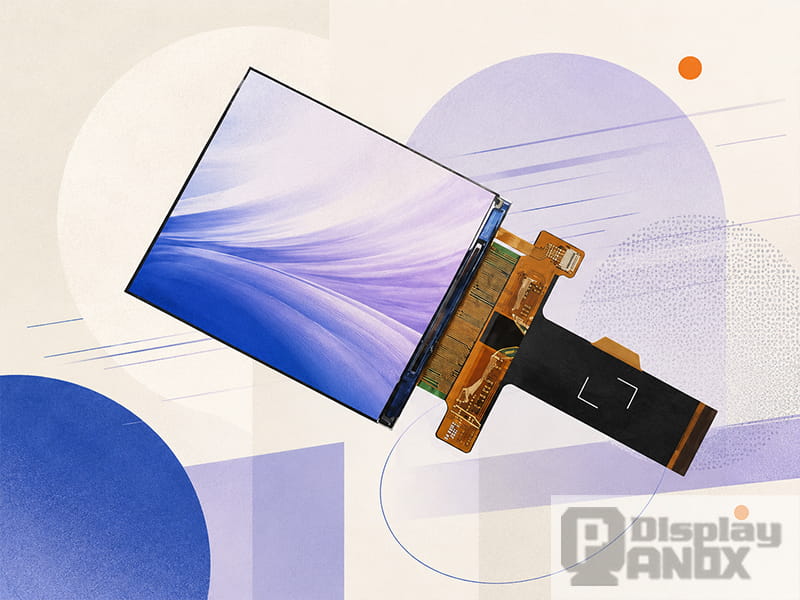
2.9 inch LCD 2K Resolution 90 Hz For VR
Latency is one of the most important performance factors in interactive displays. When a user touches a screen, moves a mouse, turns a camera, or rotates the head in a VR headset, the display must update as quickly as possible. A lower refresh rate increases the waiting time before the next frame can appear.
High refresh rate reduces this waiting window. At 60Hz, the system may wait up to 16.7 milliseconds for the next display refresh. At 120Hz, the window is cut to about 8.3 milliseconds. This does not remove all system latency, because rendering, image processing, touch scanning, sensor tracking, interface transmission, and driver behavior also matter. Still, the display refresh interval is one part of the total delay chain.
In VR and AR systems, latency is often described as motion-to-photon delay: the time between a user’s movement and the updated image reaching the eye. When this delay is too high, the image can feel disconnected from the user’s motion. The result may be discomfort, disorientation, or reduced immersion.
A high refresh rate panel gives the system more frequent opportunities to present updated frames. This is why refresh rate, rendering time, and display timing must be planned together in VR and AR product design. A 90Hz panel gives the system roughly 11.1 milliseconds per frame. A 120Hz panel gives roughly 8.3 milliseconds. If the processor and software can keep up, the display can deliver a more immediate visual response.
3. High Refresh Rate Improves Motion Clarity
Smoothness and clarity are related, but they are not the same thing. A motion can feel smooth while still looking blurred. Motion clarity depends on refresh rate, pixel response time, sample-and-hold behavior, backlight or OLED driving method, and the speed of the moving object.
For LCD panels, liquid crystal response time affects how quickly pixels move from one gray level to another. If the transition is slow, moving edges may leave trails or smear. For OLED and Micro OLED panels, pixel response can be very fast, but perceived blur can still occur because modern displays often hold each frame until the next refresh. When the viewer tracks a moving object with the eyes, the held frame can create visible blur.
High refresh rate helps because each frame remains on screen for a shorter time. This can reduce the apparent width of motion blur and make fast-moving content easier to follow. The effect is especially useful for racing games, FPV drone video, fast UI animation, VR movement, sports footage, and machine vision preview displays.
In a display panel project, this means a 120Hz panel may provide a clearer moving image than a 60Hz panel when the content and driving system are properly matched. It also means that refresh rate should be evaluated together with response time. A high Hz value on paper is less useful if the panel response, overdrive tuning, or signal timing creates visible artifacts.
4. High Refresh Rate Supports Better VR Comfort
VR is one of the strongest use cases for high refresh rate display panels. In a VR headset, the display is not a passive screen in the distance. It becomes part of the user’s perceived environment. The screen moves with head rotation, fills a large field of view, and often displays high-contrast objects, text, and fast camera movement.
When the refresh rate is too low, the user may notice judder, motion blur, or unstable visual feedback. These issues can reduce immersion and may increase discomfort for some users. A higher refresh rate helps the image update more frequently, making head motion and scene movement feel more natural.
For many VR designs, 90Hz is a practical baseline because it provides a smoother experience than 60Hz while keeping bandwidth, power, and rendering load manageable. For more demanding VR applications, 120Hz can further improve visual response and reduce the time between frames. Research on VR frame rate has also shown that 120fps can be an important threshold for user experience and simulator sickness symptoms in tested VR scenarios.
This does not mean every VR product must use 120Hz or higher. A lightweight viewer, training device, or cost-sensitive headset may use 90Hz effectively. A gaming, simulation, drone FPV, or professional visualization headset may benefit from 120Hz if the system can sustain the required frame rate. The best choice depends on the complete headset architecture.
5. High Refresh Rate Is Important for Near-Eye Micro OLED Displays
Micro OLED panels are widely used in near-eye systems because they combine compact size, high pixel density, high contrast, and fast response characteristics. For AR glasses, electronic viewfinders, thermal imaging modules, optical engines, and head-mounted displays, a tiny panel may need to deliver a detailed image through lenses or waveguides.
In these systems, high refresh rate contributes to visual stability. A 0.5 inch 1600x1200 Micro OLED 120 Hz panel, for example, can support high-density image output in a very small form factor. This is valuable when the display must fit into a compact optical module while maintaining smooth image updates.
Near-eye display design also involves brightness and optics. A Micro OLED may have high luminance at the panel level, but optical systems can reduce the brightness that finally reaches the eye. Refresh rate must therefore be considered together with luminance, contrast, pixel density, optical efficiency, thermal design, and power consumption.
For AR and compact optical applications, a balanced panel is often more useful than a single impressive specification. High refresh rate helps, but it works best when the panel also provides suitable resolution, brightness, interface support, and mechanical compatibility.
6. High Refresh Rate Helps Interactive Devices Feel More Responsive
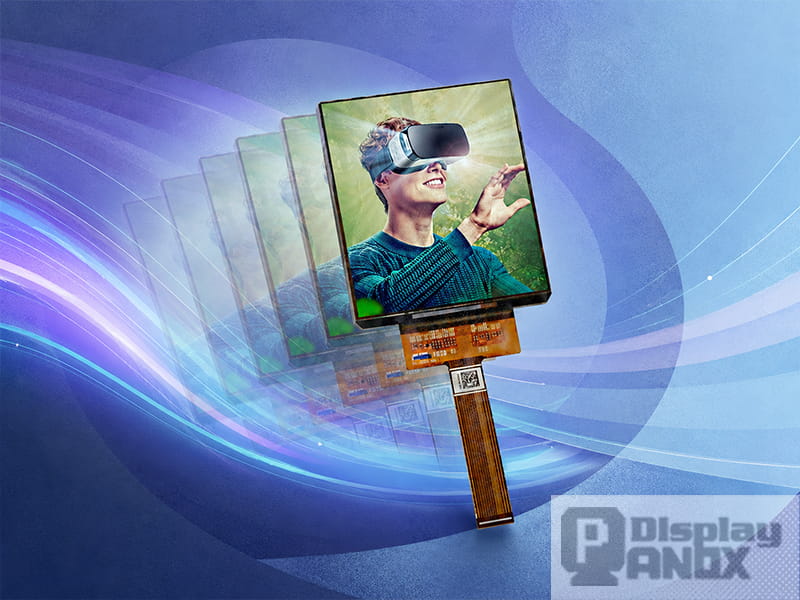
A high refresh rate display panel is not only useful for entertainment. It can improve the perceived quality of many interactive devices. Handheld terminals, portable monitors, smart control systems, medical devices, industrial HMIs, camera monitors, and robotics interfaces can all benefit from smoother motion and faster visual feedback.
When a user scrolls a list, drags a map, adjusts a camera view, or monitors a moving object, a higher refresh rate makes the interface feel more connected to the action. This can improve perceived precision even when the underlying computing system is unchanged.
For professional devices, this is important because users often judge quality through response. If an interface feels delayed, blurry, or uneven, the product may feel less reliable. A high refresh rate panel can help create a more premium and stable interaction experience, especially when combined with a responsive controller board and optimized software.
7. High Refresh Rate Requires Enough Interface Bandwidth
A higher refresh rate means the display must receive more image data every second. Resolution, color depth, refresh rate, interface type, and compression all affect the required bandwidth.
A 1440x1600 panel running at 90Hz requires far more data than a lower-resolution 60Hz display. A 1600x1200 Micro OLED running at 120Hz also needs a signal path capable of supporting high-speed transmission. This is why many compact high refresh rate panels use MIPI interfaces. MIPI DSI is common in mobile, VR, AR, and embedded display products because it supports high-speed serial transmission in a compact format.
For engineers, this means refresh rate should be confirmed at native resolution, not only under reduced settings. The host processor, display interface, driver IC, FPC design, controller board, and firmware must all support the target refresh rate. If one part of the chain is insufficient, the panel may fail to reach the expected performance.
This is also why Panox Display often supports customers with controller board solutions, such as HDMI-to-MIPI or Type-C controller boards for selected panels. A good display panel still needs the right driving solution to become usable in a real product.
8. High Refresh Rate Must Be Balanced with Power and Heat
High refresh rate has a cost. Refreshing the display more often can increase power consumption, and the processor or GPU may need to render more frames per second. In compact systems, this can create thermal pressure and reduce battery life.
This trade-off is especially important for wearable devices, VR headsets, AR glasses, handheld terminals, and portable instruments. A 120Hz display may look excellent, but if the device cannot manage power and heat, the final product may become too warm, too heavy, or too short-lived in battery operation.
A practical design may use different refresh rates for different modes. Static UI can run at a lower refresh rate, while fast motion, gaming, camera preview, or immersive content can use a higher refresh rate. This type of adaptive strategy helps balance smoothness with efficiency.
For product developers, the question should not be “What is the highest refresh rate available?” A more useful question is “What refresh rate can the complete device sustain under real operating conditions?”
9. Why 90Hz and 120Hz Are Common Choices
In small and medium display projects, 90Hz and 120Hz are often more practical than extreme monitor-class refresh rates. A desktop high refresh rate monitor may advertise 144Hz, 240Hz, or higher. In compact embedded displays, the design constraints are different.
A 90Hz panel is often a strong choice for VR, handheld, and professional visualization devices. It improves motion smoothness over 60Hz and keeps bandwidth and rendering demands within a manageable range.
A 120Hz panel is better suited for applications where motion is fast, latency is critical, or image updates must feel extremely fluid. VR gaming, simulation, AR interaction, FPV control, high-speed camera preview, and near-eye optical systems can all benefit from 120Hz when the content pipeline supports it.
Higher refresh rates can be useful in specialized systems, but they also increase requirements on interface bandwidth, driving stability, power, heat, and processing. For many real-world product designs, 90Hz and 120Hz provide the best balance between performance and feasibility.
10. Panox Display High Refresh Rate Panel Options
Panox Display provides LCD, AMOLED, OLED, and Micro OLED panels for customers developing compact display products. In the High refresh rate category, the product range covers several practical directions.
For VR display development, Panox Display offers compact high-PPI TFT-LCD panels such as 3.5 inch LCD 90 Hz For VR and 2.54 inch round/circular TFT-LCD modules with 1440x1600 resolution and MIPI interface. These panels are suitable for near-eye optical systems where resolution, size, refresh rate, and interface compatibility all matter.
For Micro OLED applications, Panox Display offers a 0.5 inch 1600x1200 Micro OLED with 60Hz to 120Hz frame rate, 1000 cd/m² luminance, high PPI, MIPI + I2C interface, and Type-C controller board support. This type of panel is suitable for AR, VR, EVF, thermal imaging, head-mounted displays, and compact optical engines.
For larger compact visual devices, a 7 inch AMOLED OLED 1920x1080 MIPI panel can support vivid color, high contrast, and a thin structure for handheld, monitor, and embedded display applications. Although product selection depends on the final device architecture, AMOLED remains attractive where color performance, contrast, and slim design are important.
Panox Display can also support controller boards, connectors, cover glass, touch panel customization, and display integration services. For high refresh rate products, this support is especially important because panel performance depends on both the screen and the driving system.
11. How to Decide Whether High Refresh Rate Is Worth It
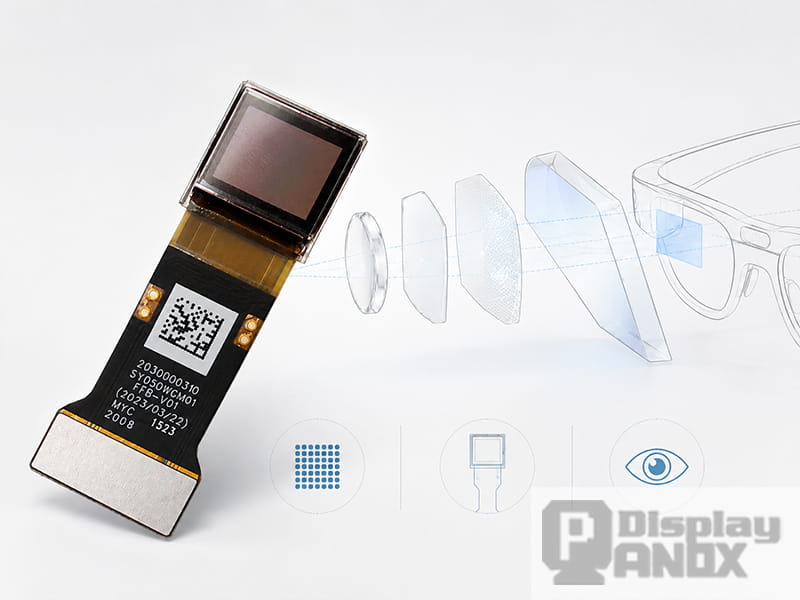
0.5 inch 1600x1200 Micro OLED 1000 cd luminance 120 Hz
High refresh rate is worth considering when the display shows motion, responds to user input, or sits close to the eye. A static industrial status panel may not need 120Hz. A VR headset, AR module, FPV viewer, gaming handheld, camera preview device, or fast control interface often benefits from a higher refresh rate.
A good selection process begins with the application. If the device displays fast motion, choose 90Hz or 120Hz as a starting point. If the display is used in a near-eye optical path, evaluate refresh rate together with resolution, PPI, brightness, response time, and optical design. If the product is battery-powered, review power consumption and heat under continuous operation. If the panel uses MIPI, confirm lane configuration, timing, initialization code, and controller board support before finalizing the design.
High refresh rate improves the final user experience only when the whole system is designed to support it. The panel, driver board, processor, software, content frame rate, and power design must work together.
Conclusion
High refresh rate matters because modern displays are no longer used only for static images. They are used for motion, interaction, immersion, control, and real-time visual feedback. A high refresh rate monitor improves smoothness and responsiveness on the desktop, while a high refresh rate display panel can directly affect comfort and clarity in VR, AR, handheld, and professional devices.
For display engineers, the real value of high refresh rate lies in balance. A good panel should deliver smooth motion, low perceived latency, stable image quality, suitable brightness, enough interface bandwidth, and manageable power consumption. The right refresh rate is the one that fits the product’s application and can be sustained by the complete system.
Panox Display provides high refresh rate LCD, AMOLED, and Micro OLED display panels for customers developing VR headsets, AR optical modules, handheld devices, viewfinders, and custom visual systems. With suitable panel selection and the right driving solution, high refresh rate becomes more than a specification. It becomes a practical advantage in visual performance, user comfort, and product quality.
Learn more: High Refresh Rate Monitor and Display Panels: What Refresh Rate Really Means for Modern Visual Devices