







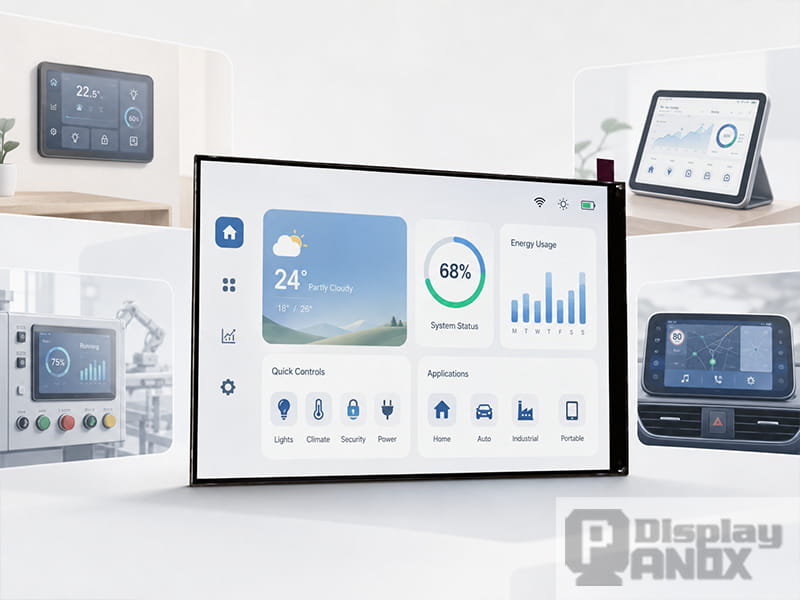
IPS LCD screens are used in a wide range of products because they solve a very common display problem: the image needs to stay clear when the screen is viewed from different positions. In real devices, users rarely look at a screen from one perfect angle. A tablet is tilted in the hand, an industrial panel is mounted on equipment, a vehicle display is seen from the driver and passenger side, and a long strip screen may be installed across a narrow dashboard or device window.
IPS, short for In-Plane Switching, is a liquid crystal display technology known for wide viewing performance and stable color reproduction. For product designers, this makes IPS-LCD useful in applications where image consistency, interface readability, and long-term availability are more important than using the thinnest or most expensive display technology.
PanoxDisplay supplies small and medium-size IPS-LCD display panels for industrial, embedded, tablet, development board, VR, long strip, round display, and custom display applications. Depending on the project, IPS LCD screens can be integrated with touch panels, cover glass, connectors, FPC customization, and controller boards.
1. Industrial HMI and Machine Control Panels
Industrial HMI is one of the most important application areas for IPS LCD screens. A human-machine interface often needs to show production status, alarms, temperature, speed, operating menus, and system feedback. The display may be viewed by different operators during a shift, and the user may stand slightly above, below, or beside the equipment.
In this environment, viewing stability is not just a visual advantage. It directly affects how easily an operator can read the interface. If the display loses contrast from the side, an alarm color or value may become harder to recognize. IPS-LCD helps keep the image more consistent across viewing directions, which makes it suitable for compact control panels, test equipment, factory machines, power systems, and smart control terminals.
A 4.3 inch 800×480 IPS-TFT industrial LCD with Parallel RGB 24-bit interface is a typical example for compact embedded HMI projects. Its size is small enough for control boxes and handheld devices, while the 800×480 resolution gives enough space for icons, buttons, basic charts, and status cards. The RGB interface is also familiar to many embedded hardware platforms, making it practical for MCU and MPU-based products.
For industrial use, the display selection should include more than the screen size. Engineers also need to check operating temperature, backlight brightness, touch panel requirements, connector direction, FPC length, mounting structure, and long-term supply planning.
2. Embedded Development and Raspberry Pi Display Projects
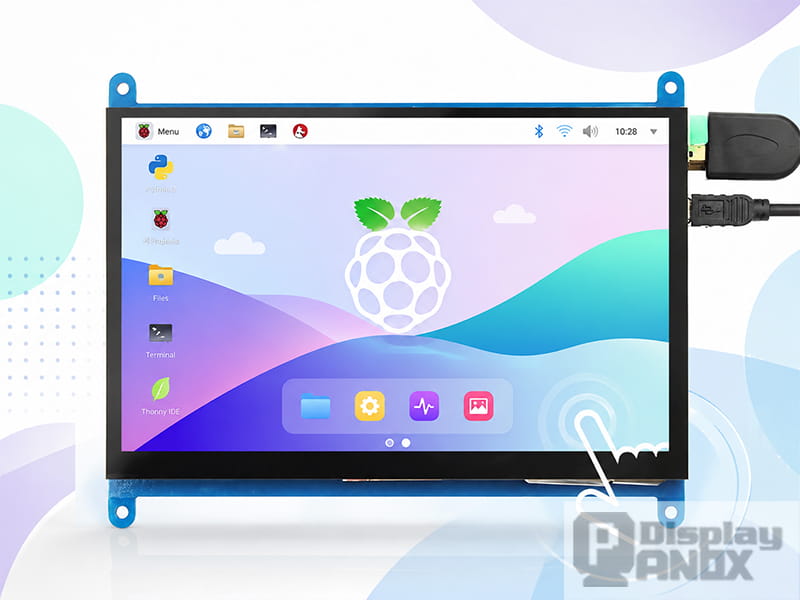
7 inch Raspberry Pi LCD Display Touch Screen
IPS LCD screens are widely used in development board projects, especially when engineers need a reliable screen for testing software, building prototypes, or creating small control terminals. Raspberry Pi displays are a good example. A 7 inch Raspberry Pi LCD touch screen can be used for dashboards, media control, IoT panels, educational devices, smart home interfaces, and small automation systems.
For these projects, the display is often evaluated through actual interaction. Touch response, UI readability, cable connection, resolution, and system compatibility all matter. IPS-LCD is useful because the screen remains easier to view when the device is placed on a desk, mounted on a stand, or shared by several people during development.
A development display also helps teams move faster. Instead of designing a custom display board from the beginning, engineers can use a ready-to-test module or controller board to validate the user interface first. Once the UI structure, size, and brightness are confirmed, the display can be customized for production with a suitable connector, cover glass, touch panel, or housing design.
In embedded products, IPS LCD screens are often selected for a balanced reason: they support clear graphics, mature driving options, and practical integration without pushing the project into a more complex display architecture too early.
3. Tablet, Portable Monitor, and Handheld Device Displays
Tablet-style devices are natural applications for IPS LCD screens. A tablet is rarely held perfectly straight. Users rotate it, tilt it, share it, and view it from changing distances. This makes wide viewing performance and stable color especially valuable.
A 7.0 inch LCD for tablet applications can support portable terminals, handheld inspection systems, smart control devices, medical-style instruments, home automation panels, and compact monitors. The screen needs to show text, icons, images, maps, or video with consistent clarity. IPS-LCD gives designers a strong foundation for this type of visual interface.
High-resolution tablet displays, such as 7 inch, 9.7 inch, and other medium-size IPS-LCD modules, are useful when the interface needs more detail. A 9.7 inch TFT-LCD with 2048×1536 resolution and eDP interface can be used in products that require a larger visual area and fine image detail, such as high-density control panels, inspection equipment, custom tablets, and embedded monitors.
For portable devices, designers should also consider power consumption and brightness. Since LCDs use a backlight, battery-powered products need careful backlight current control. If the device will be used outdoors or near windows, brightness, cover glass reflection, and optical bonding may become as important as the IPS panel type.
4. Vehicle, Transportation, and Mobility Displays
Vehicle displays often operate in difficult viewing conditions. The screen can be installed at an angle, exposed to sunlight, viewed from different seats, or affected by vibration and temperature variation. IPS LCD screens are used in vehicle dashboards, rear-seat displays, navigation modules, rearview systems, transport information screens, and mobility control panels.
In these applications, a stable image helps improve usability. A driver should be able to glance at the display without adjusting body position. A passenger-facing screen should remain clear from the side. For public transport or vehicle information displays, the screen may need to be read quickly from different positions.
IPS-LCD is also suitable for narrow vehicle display layouts. Long strip IPS LCD panels can be used in dashboards, rearview mirror systems, instrument extensions, and information bars. The stretched shape allows product designers to fit the display into limited spaces where a standard rectangular panel would be too tall or visually heavy.
Vehicle-related display projects usually require careful specification review. Brightness, operating temperature, anti-glare surface treatment, vibration resistance, backlight lifetime, and interface stability should be confirmed before final selection.
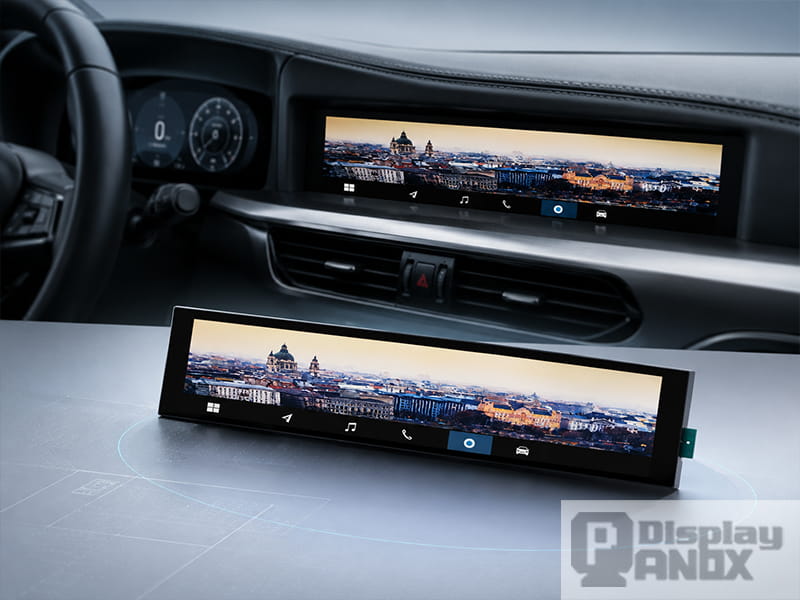
6.8 inch long strip LCD IPS TFT
5. Long Strip and Stretched Display Applications
Long strip IPS LCD screens are used when the display area needs to follow a narrow product structure. This display format appears in PC case panels, automotive dashboards, shelf-edge systems, industrial status displays, smart home control strips, audio equipment, elevator panels, and custom information bars.
A 6.8 inch long strip IPS TFT-LCD is useful because it provides a wide, narrow visual format while keeping image quality stable from multiple directions. The screen can show status information, dynamic icons, short video loops, temperature data, system monitoring, or decorative UI elements.
The value of IPS is very visible in long strip applications. A stretched screen may be viewed from the left, right, or above depending on where it is mounted. If the image shifts strongly at an angle, the long format becomes less useful. IPS-LCD helps the content remain more consistent across the length of the panel.
For long strip displays, engineers should pay special attention to interface bandwidth, screen orientation, mechanical fixing, active area, cover glass shape, and UI scaling. A long strip display often requires custom UI design because ordinary rectangular layouts do not automatically fit the stretched format.
6. Round Display and Smart Control Applications
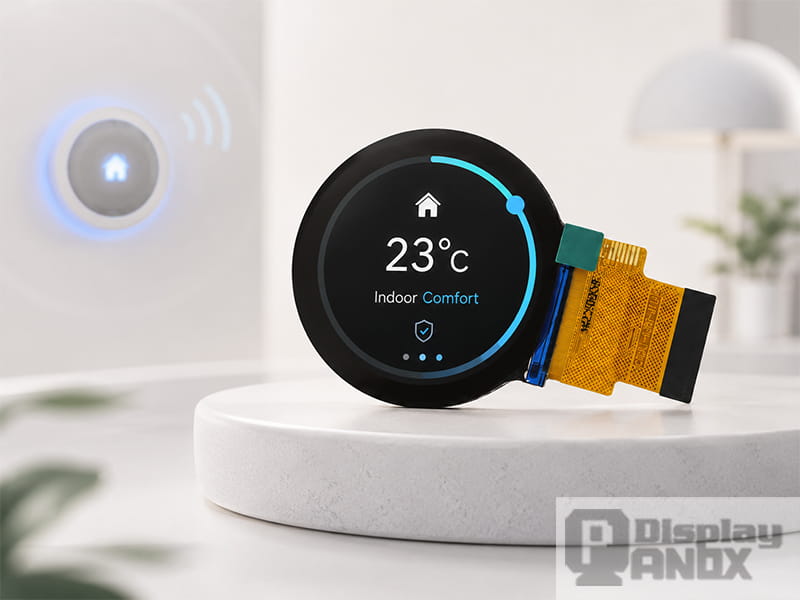
Round TFT LCD modules are used in products where the display itself becomes part of the product identity. Common applications include smart home control knobs, wearable-style devices, small instruments, fitness equipment, decorative panels, industrial dials, and compact monitoring devices.
A 2 inch round TFT LCD module can be used for circular dashboards, icons, gauges, menus, and simple graphical interfaces. In this type of product, the screen shape matters as much as the resolution. A round display can make the product feel more intuitive when the interface is based on rotation, status rings, or dial-style controls.
IPS-LCD is helpful for round displays because the screen may be mounted on a surface that users view from many positions. For example, a wall-mounted circular control panel may be viewed from standing height, sitting height, and side angles. Stable viewing helps the round UI remain readable and visually clean.
Round LCD projects need special UI planning. Designers should avoid placing important content too close to the circular edge. Touch areas, icons, and status rings should be arranged to fit the active area, not a square interface template.
7. VR, Near-Eye, and Compact High-Pixel-Density Modules
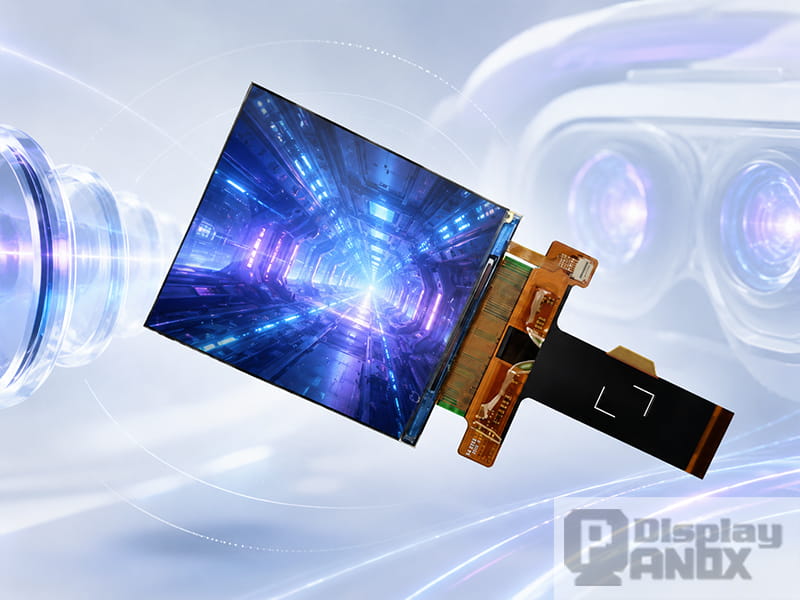
2.9 inch TFT-LCD 120 Hz For VR
IPS LCD screens can also be used in compact high-pixel-density display applications, including VR-related modules and optical development systems. A 2.9 inch TFT-LCD 120 Hz module for VR is an example of a small display where resolution, refresh rate, response behavior, and optical integration become important.
In VR and near-eye systems, the display is placed close to the user’s eyes and viewed through lenses. This creates strict requirements for pixel density, image uniformity, refresh rate, and signal stability. IPS-LCD can be considered when the project needs a mature TFT-LCD display path, stable color, and a compact module structure.
The final optical performance depends on more than the display panel. Lens design, backlight structure, field of view, driver timing, thermal management, and mechanical alignment all affect the user experience. For this reason, VR-related LCD modules should be evaluated as part of the full optical system, not as a standalone screen.
8. 3D Printing and Optical Exposure Systems
Some LCD panels are used in resin 3D printing and optical exposure systems. In these applications, the display may act as an image mask or light-modulating layer. A 5.5 inch LCD for 3D printing systems such as ANYCUBIC Photon S or Wanhao D7 belongs to this kind of use case.
For 3D printing, the key requirements can be different from ordinary display products. The panel may need to support fine image detail, stable exposure patterns, good transmittance, and reliable operation under specific light conditions. Resolution, active area, pixel structure, thermal design, and compatibility with the light source should all be reviewed carefully.
IPS-LCD can still offer value when the same module or panel type is used in applications where image stability and uniformity matter. However, the selection should be based on the printing system’s optical path, resin curing requirements, mechanical structure, and expected operating conditions.
For customers developing custom exposure equipment, PanoxDisplay can help evaluate whether a standard LCD module, a bare panel, or a custom display solution is more suitable.
9. Medical, Testing, and Measurement Instruments
Many medical-style, laboratory, and measurement devices use small or medium-size LCD screens to show values, graphs, waveforms, operating states, and user prompts. These products often need the screen to be readable from a desk, cart, bench, or fixed machine position.
IPS LCD screens are useful because they keep the interface visually stable when the user changes viewing angle. A technician may look at the screen from the side while adjusting equipment. A patient monitor or lab instrument may be viewed by more than one person. A testing device may be placed on a bench where the viewing height changes throughout the day.
For this category, display quality should be matched with reliability. Important considerations include brightness, contrast, operating temperature, touch panel durability, cover glass strength, backlight lifetime, and ease of cleaning or enclosure integration. In some products, sunlight readability or anti-glare treatment may also be required.
10. Smart Home and Building Control Panels
Smart home control panels, room controllers, access systems, and building automation terminals need displays that look clean in everyday environments. The display may be mounted on a wall, placed near a door, installed in a control box, or used as part of a smart appliance.
IPS LCD screens are well suited to these products because they support colorful UI design and stable viewing. A user may look at the panel from the side while walking past, or operate it from a lower or higher angle. The interface should still look clear and modern.
Touch integration is often important in smart home products. A display panel may need PCAP touch, cover glass, printed border, anti-fingerprint coating, or custom lens shape. The display and touch structure should be planned together, because the cover glass and adhesive stack can affect optical performance, thickness, and mechanical assembly.
For smart home products, IPS-LCD gives designers a practical balance of appearance, cost, and usability.
11. Retail, POS, and Commercial Terminals
Retail and commercial devices often rely on displays to guide transactions, show prices, present menus, and support customer interaction. IPS LCD screens can be used in POS terminals, ordering systems, self-service kiosks, customer-facing displays, payment accessories, and commercial control panels.
In these environments, the screen may be seen by employees and customers from different sides of a counter. A display with weak viewing stability can make the interface harder to read and less professional. IPS-LCD helps keep the screen presentation more consistent.
Commercial terminals may also require strong touch performance, durable cover glass, and easy cleaning. For a POS or kiosk product, the screen should be evaluated together with the enclosure, touch panel, cable routing, and controller board.
12. Security, Access Control, and Monitoring Devices
Security and access control products often use compact LCD screens for menus, identity prompts, camera previews, operating status, and system feedback. These products include door access terminals, time attendance devices, security panels, intercom systems, monitoring controllers, and smart locks with graphical displays.
IPS LCD screens can improve the user experience by keeping content readable from different heights and positions. A wall-mounted access device may be viewed by tall users, children, staff carrying items, or people approaching from the side. Stable viewing makes the interface easier to understand.
For security devices, the display may also need to work with camera modules, touch panels, buttons, speakers, or network hardware. A compact IPS-TFT LCD with a suitable interface can simplify the visual part of the product while leaving space for other modules.
13. Consumer Electronics and Custom Display Products
IPS LCD screens are also used in many consumer and maker products. Examples include portable monitors, small media players, gaming accessories, audio systems, DIY control panels, custom PC case screens, handheld consoles, camera accessories, and information displays.
The reason is simple: IPS-LCD provides a strong visual result without requiring every product to use OLED or AMOLED. It supports colorful graphics, a mature supply chain, and many interface options. For custom products, this makes IPS LCD screens flexible and easier to source.
In consumer electronics, industrial-grade overengineering may not always be necessary. However, the display still needs to match the product’s visual identity. Brightness, viewing angle, resolution, touch structure, and cover glass design all influence how the final device feels in the user’s hand.
14. Choosing the Right IPS LCD Screen by Application
Different applications need different display priorities. A compact HMI may need stable supply and an RGB interface. A high-resolution tablet-style product may need MIPI or eDP. A Raspberry Pi project may need an HDMI or compatible controller board. A long strip display may require custom UI design and careful mechanical placement. A round display may need a circular interface layout.
The table below gives a quick application-based view:
| Application Area | Display Priority | Common Interface Direction | Typical Design Notes |
|---|---|---|---|
| Industrial HMI | Reliability, readability, touch option | RGB, LVDS, MIPI, HDMI board | Check temperature range, backlight, connector, and enclosure |
| Raspberry Pi / Embedded Development | Easy connection, touch, prototype speed | HDMI, USB touch, MIPI in some systems | Controller board support can reduce development time |
| Tablet / Portable Device | Resolution, color, touch, power | MIPI, eDP | Check brightness, battery impact, and touch stack |
| Long Strip Display | Mechanical fit, UI scaling, viewing stability | MIPI, HDMI board, custom interface | Design content specifically for stretched layout |
| Round Display | Product identity, circular UI, compact size | SPI, RGB, MIPI depending on model | Avoid square UI templates inside a round active area |
| VR / Near-Eye Module | Pixel density, refresh rate, optical matching | MIPI, custom driver | Evaluate with lens, backlight, timing, and thermal design |
| 3D Printing / Exposure | Pixel detail, transmittance, exposure stability | MIPI, HDMI board, custom driver | Match panel to optical path and light source |
| Vehicle / Mobility | Viewing stability, brightness, temperature | LVDS, MIPI, RGB, HDMI board | Consider anti-glare cover glass and vibration |
| Smart Home / Building Control | Touch, appearance, viewing angle | RGB, MIPI, HDMI board | Plan cover glass and touch from the beginning |
15. How PanoxDisplay Supports IPS LCD Applications
PanoxDisplay works with customers who need IPS LCD screens for real product development, not only sample comparison. The product range includes IPS-TFT LCD modules, long strip LCDs, round TFT LCDs, Raspberry Pi LCD touch screens, high-resolution TFT-LCD panels, VR display modules, and LCD panels for special applications.
Display selection can include more than the panel. A project may need a matching connector, custom FPC, cover glass, PCAP touch panel, HDMI controller board, MIPI adapter, backlight cable, or mechanical support. PanoxDisplay can help customers evaluate these requirements during the display selection stage, so the screen can fit the electrical, optical, and mechanical structure of the final product.
For application projects, the best IPS LCD screen is the one that works well in the actual environment. A good display choice should match the viewing condition, interface, resolution, brightness, touch requirement, operating temperature, and production plan.
Conclusion
IPS LCD screens are used in many applications because they provide a practical balance of clear image quality, stable color, wide viewing performance, mature supply, and flexible integration. From industrial HMI panels and Raspberry Pi touch screens to tablets, long strip displays, round modules, VR displays, vehicle systems, and 3D printing equipment, IPS-LCD remains one of the most useful display technologies for small and medium-size products.
The right IPS LCD screen should always be selected according to the application. Size, resolution, interface, brightness, touch structure, cover glass, operating temperature, and controller support all shape the final result. With the right display module and integration path, IPS-LCD can help a product feel clearer, more reliable, and easier to use.
Learn more: Why Is an IPS LCD Screen Important for Modern Display Products?