







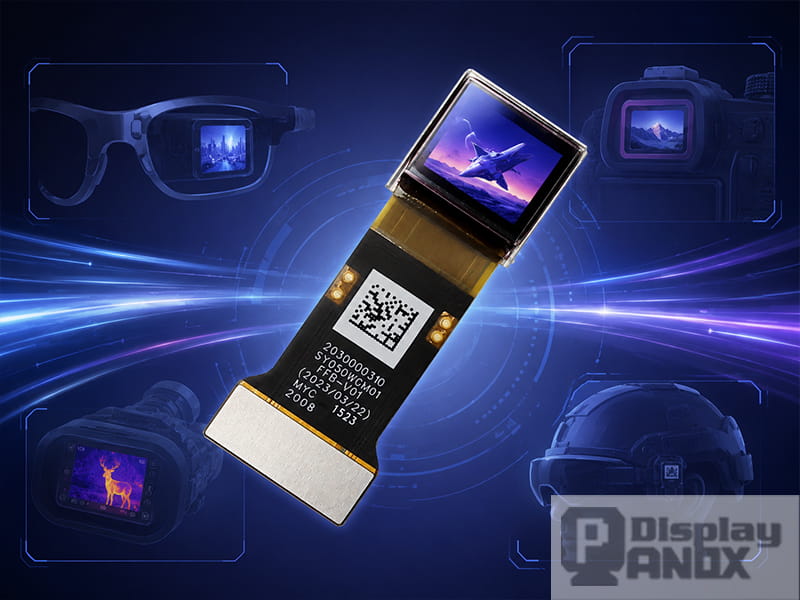
0.5 inch 1600x1200 Micro OLED 1000 cd luminance 120 Hz
High refresh rate display panels are now used in far more than gaming monitors. As visual devices become smaller, closer to the eye, more interactive, and more dependent on real-time image processing, refresh rate has become an important part of display performance. A high refresh rate monitor improves smoothness on a desktop. A high refresh rate display panel can shape the user experience inside VR headsets, AR optical engines, handheld devices, professional instruments, simulation systems, and compact embedded products.
In application design, refresh rate should never be treated as an isolated number. A 90Hz, 120Hz, or higher refresh rate display needs to match the device’s resolution, interface bandwidth, graphics capability, power budget, optical structure, and content type. A panel that works well for a VR headset may be unsuitable for a static industrial HMI. A Micro OLED that is ideal for a near-eye optical module may not be the best choice for a large handheld terminal.
This article explains where high refresh rate display panels are most useful, why different applications need different refresh rate targets, and how Panox Display’s LCD, OLED, AMOLED, and Micro OLED panels can support modern visual device development.
1. VR Headsets and Immersive Displays
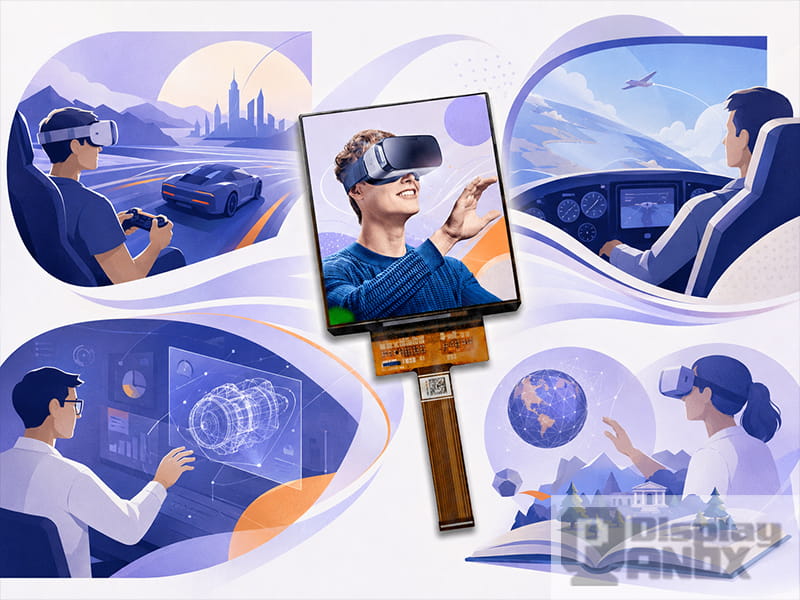
VR is one of the most important application areas for high refresh rate display panels. In a VR headset, the display sits very close to the user’s eyes and is viewed through optical lenses. Any delay, judder, motion blur, or unstable frame output can become more noticeable than it would be on a normal monitor.
For VR, refresh rate directly affects visual comfort and motion smoothness. When the user turns their head, the display must update the image quickly enough to match the new viewing direction. A lower refresh rate increases the gap between head movement and visible image update, which may reduce immersion and make the experience feel less stable.
This is why many VR designs use 90Hz as a practical baseline. A 90Hz panel refreshes every 11.1 milliseconds, which gives smoother motion than a standard 60Hz display while keeping the system load within a reasonable range. For gaming, simulation, training, and fast interactive content, 120Hz can provide a stronger visual response, as long as the GPU, rendering engine, interface, and display driver can sustain it.
Panox Display’s high refresh rate VR panel options include compact 90Hz and 120Hz TFT-LCD modules, such as 2.9 inch and 3.5 inch VR display panels. These panels are suitable for head-mounted display development where high PPI, compact size, MIPI interface, and stable refresh performance need to be considered together.
2. AR Glasses and Near-Eye Optical Engines
AR glasses and near-eye optical modules have a different design logic from VR headsets. VR usually blocks the outside world and creates a fully virtual scene. AR places digital information into the user’s real-world view. In both cases, the display is close to the eye, but AR often has stricter limitations on size, weight, brightness, and optical efficiency.High refresh rate matters in AR because virtual information needs to feel visually stable. Floating text, navigation prompts, icons, industrial overlays, or targeting information should remain clear when the user moves. If the image updates too slowly, the virtual layer may appear less anchored to the real world.
Micro OLED is commonly used in near-eye systems because it can provide very high pixel density in a tiny active area. A compact 0.5 inch 1600x1200 Micro OLED with support for 60Hz to 120Hz can be useful for AR optical engines, electronic viewfinders, thermal imaging modules, and head-mounted displays. In these applications, refresh rate works together with brightness, contrast, pixel density, optical path design, and thermal control.
For AR, the final image seen by the user depends on more than panel performance. Waveguides, birdbath optics, lenses, reflective surfaces, and optical coatings can all reduce brightness or change image quality. A high refresh rate Micro OLED panel gives the system a strong foundation, but the complete optical engine must be designed around the panel’s luminance, active area, interface, and mechanical structure.
3. High Refresh Rate Monitor and Portable Display Devices
The phrase “High Refresh Rate Monitor” is often associated with gaming monitors, esports screens, and premium desktop displays. In this category, the benefits are easy to understand: smoother motion, faster cursor response, reduced perceived tearing, and better readability during fast movement.For desktop monitors, refresh rates such as 120Hz, 144Hz, 165Hz, and higher are common. In embedded and portable display design, the same idea appears in a more compact form. A small AMOLED or LCD panel with a high refresh rate can be used in portable monitors, control screens, handheld gaming devices, field equipment, or compact visual terminals.
A 7 inch AMOLED 1920x1080 MIPI display panel, for example, can be relevant for portable visual devices where color, contrast, thin structure, and responsive motion are important. In this type of application, the display may need to show camera feeds, dynamic maps, control interfaces, video, or fast UI transitions. A higher refresh rate helps the interface feel more responsive and visually refined.
The main design challenge is bandwidth. A high-resolution display running at a higher refresh rate sends much more data per second than a basic 60Hz panel. This is why MIPI interface configuration, controller board support, power rails, FPC design, and firmware initialization should be confirmed early in the project.
4. FPV, Drone Control, and Real-Time Camera Preview
High refresh rate panels are useful in FPV devices, drone controllers, camera preview screens, and live monitoring systems. These applications depend on real-time motion. A pilot, operator, or camera user needs the screen to respond quickly as the scene changes.In FPV and drone control, the display must show fast movement, direction changes, vibration, and camera rotation. If the image feels delayed or blurry, the operator may lose confidence in the control feedback. A 90Hz or 120Hz display panel can improve perceived smoothness, especially when paired with a low-latency video pipeline.
For camera preview and electronic viewfinders, high refresh rate can also improve tracking. When the user follows a moving subject, a smoother display helps the preview feel more natural. Micro OLED panels are particularly relevant for compact EVF systems because they combine small size, high PPI, and fast response characteristics.
In these products, refresh rate should be matched with input latency. A fast display cannot fully compensate for a slow camera sensor, delayed transmission, or weak image processing. The best result comes from a complete real-time pipeline: sensor capture, image processing, transmission, display driving, and panel response.
5. Simulation, Training, and Professional Visualization
Simulation and training systems often use high refresh rate displays because they need fast feedback and visual continuity. Flight simulation, driving simulation, industrial training, military training, sports training, and emergency response training all rely on the user’s ability to react to changing visual information.In these applications, refresh rate affects both comfort and performance. A smooth display allows the user to follow motion more easily. It also makes virtual scenes feel more continuous, which is important when the user is learning real-world actions through a simulated environment.
VR-based training has especially high requirements. The display must update according to head movement, body movement, controller input, and virtual scene changes. A 90Hz display can support many training scenarios, while 120Hz becomes valuable when the simulation includes fast movement, racing, flight, equipment operation, or rapid visual events.
For professional visualization, panel selection depends on the system structure. A headset may require compact high-PPI panels. A simulator control console may use larger LCD or AMOLED panels. A portable training device may need a balance between brightness, power consumption, refresh rate, and interface compatibility.
6. Medical Visualization and Healthcare Training
Medical and healthcare systems increasingly use advanced visual displays for training, imaging review, surgical planning, rehabilitation, and immersive education. In these environments, the display may show moving anatomy, endoscopic video, simulation content, or interactive training scenes.High refresh rate can be useful when the display shows motion or when the user interacts with the visual content in real time. In medical simulation, smoother visual feedback can make the training environment feel more natural. In rehabilitation or VR-assisted therapy, stable motion can also improve comfort for users who may be sensitive to visual discomfort.
For medical display projects, refresh rate is only one part of the evaluation. Color accuracy, brightness stability, contrast, resolution, interface reliability, safety requirements, and long-term availability may be equally important. A high refresh rate panel should be selected according to the specific use case rather than used as a general upgrade for every medical device.
For compact medical visualization modules, high-PPI LCD, AMOLED, or Micro OLED panels can be considered depending on the optical structure and device size. Near-eye medical training systems may benefit from Micro OLED, while handheld instruments may be better served by small TFT-LCD or AMOLED panels.
7. Industrial HMI, Robotics, and Machine Vision Interfaces
Many industrial displays show relatively static information, so a very high refresh rate may not be necessary. However, some industrial and robotic systems involve motion, live video, moving objects, or real-time control. In these cases, high refresh rate can improve how clearly operators see changes.Robotics interfaces may display camera feeds, sensor visualization, path planning, or motion feedback. Machine vision systems may show inspection results, moving conveyor lines, robotic arm positions, or dynamic overlays. A higher refresh rate can make these displays feel more immediate, especially when the user needs to monitor motion and react quickly.
Industrial equipment also requires stability. A high refresh rate panel should be evaluated for operating temperature, brightness, lifetime, power consumption, EMI, interface reliability, and long-term supply. A panel that looks good in a demo may still need careful validation before being used in a factory, outdoor control terminal, or professional instrument.
For this category, 90Hz is often enough when the goal is smoother interaction and live preview. 120Hz may be useful for fast-moving inspection, remote control, robotics operation, or simulation-based industrial training.
8. Automotive, Transportation, and Mobility Displays
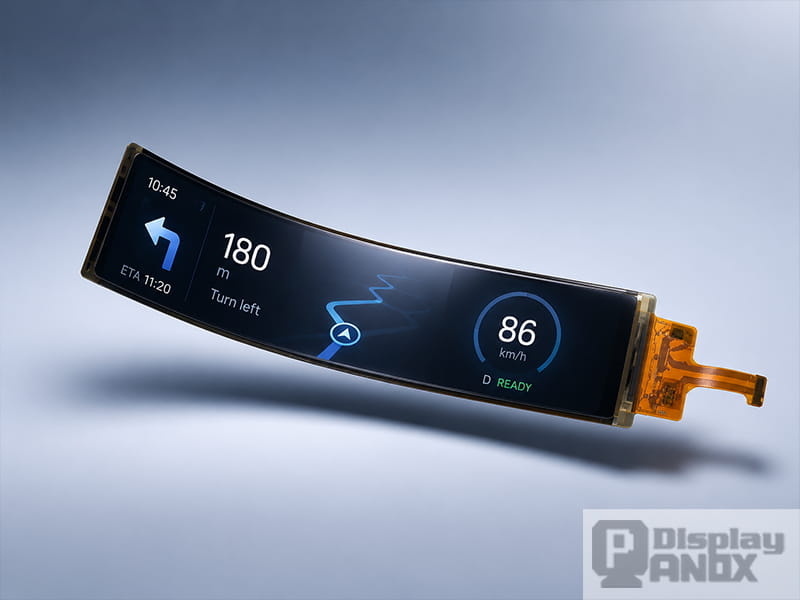
Modern vehicles and transportation systems include more screens than before. Digital dashboards, center displays, rear entertainment screens, smart mirrors, public transport information panels, and specialized vehicle HMIs all need stable and readable display performance.
High refresh rate can improve the perceived smoothness of map movement, camera feeds, speed-related animations, ADAS visualization, and dynamic UI transitions. In some cases, the benefit is mainly comfort and user experience. In other cases, it helps operators track moving information more easily.
Vehicle displays also bring strict requirements. Brightness, temperature range, vibration resistance, viewing angle, response time, and interface robustness may matter more than extreme refresh rate. A balanced high refresh rate LCD or AMOLED panel can support smoother visuals, but the final choice should match automotive or mobility system requirements.
For motorcycles, drones, electric bikes, and compact mobility devices, smaller high refresh rate panels may be used in control displays or camera monitoring modules. In these applications, low power and sunlight readability often become key selection factors.
9. Handheld Devices and Professional Portable Terminals
Handheld devices are another practical application area for high refresh rate display panels. These devices may include inspection terminals, portable measurement tools, field monitors, camera control units, gaming handhelds, and professional service equipment.A high refresh rate panel can make a handheld device feel more responsive during scrolling, live preview, map movement, menu transitions, and touch interaction. This does not always require an extremely high refresh rate. A well-driven 90Hz display may already create a clear improvement over 60Hz for many portable devices.
For handheld products, power consumption is a major design factor. Higher refresh rate can increase panel and system power use, especially when the processor must render more frames. The display should therefore be matched with battery size, thermal design, and use mode. Some products may use adaptive refresh rate, switching between lower and higher refresh settings depending on content.
Panox Display can support handheld display development with LCD, AMOLED, touch panel, cover glass, and controller board solutions. For custom devices, the right display choice often depends on a practical balance: size, brightness, touch, interface, refresh rate, and mechanical integration.
10. Gaming, Entertainment, and Interactive Media
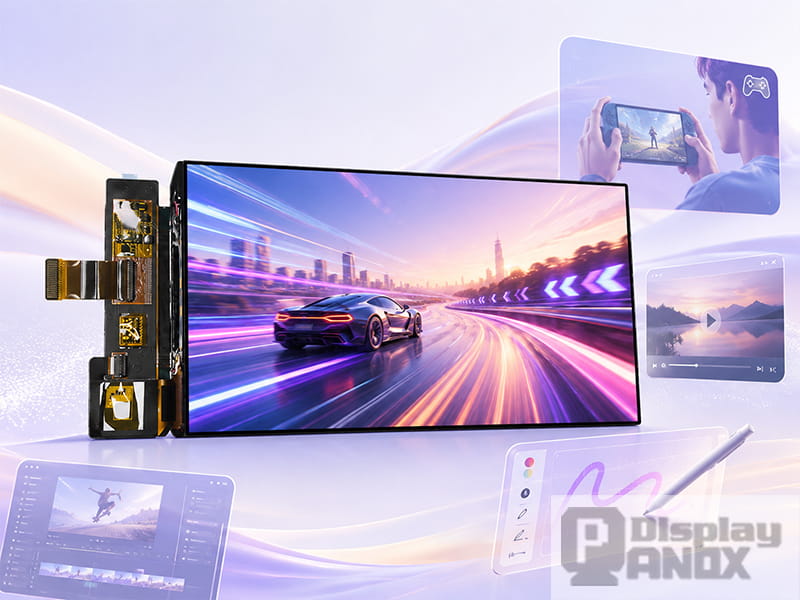
Gaming and entertainment remain major drivers of high refresh rate display demand. High refresh rate monitors are popular because they make fast movement smoother and help players respond more quickly. The same demand appears in portable gaming devices, VR gaming headsets, arcade equipment, racing simulators, and interactive entertainment systems.
For gaming, refresh rate should match the content frame rate. A 120Hz panel can show smoother motion only when the system can generate enough frames. If the graphics processor struggles to maintain the target frame rate, the user may still see stutter or uneven motion.
OLED and AMOLED panels are attractive for gaming-related products because they provide high contrast, vivid color, fast response, and slim structure. Fast TFT-LCD panels remain useful where cost, brightness, size options, and manufacturing maturity are important. Micro OLED becomes relevant for compact near-eye gaming devices and optical modules.
For this application category, the best panel choice depends on whether the product is a large monitor, handheld screen, VR headset, or near-eye display module.
11. How to Match Refresh Rate to the Application
A high refresh rate panel should be selected according to the actual use case. The following table gives a practical reference for common application directions.| Application | Recommended Refresh Rate Direction | Suitable Panel Types | Key Selection Factors |
| VR headset | 90Hz or 120Hz | TFT-LCD, OLED, AMOLED | PPI, latency, MIPI interface, optics, power |
| AR optical module | 60Hz to 120Hz | Micro OLED | Brightness, PPI, contrast, optical efficiency |
| Portable monitor | 90Hz to 120Hz | LCD, AMOLED | Resolution, interface, power, color performance |
| FPV / drone display | 90Hz or 120Hz | LCD, Micro OLED | Low latency, brightness, signal chain |
| Medical training | 90Hz or 120Hz | LCD, OLED, Micro OLED | Comfort, clarity, color, reliability |
| Industrial control | 60Hz to 120Hz | TFT-LCD, AMOLED | Stability, temperature, viewing angle, lifetime |
| Gaming device | 120Hz or higher where supported | LCD, AMOLED, OLED | Response time, contrast, system frame rate |
| EVF / viewfinder | 90Hz or 120Hz | Micro OLED | High PPI, fast response, compact optics |
12. Panox Display High Refresh Rate Panel Solutions
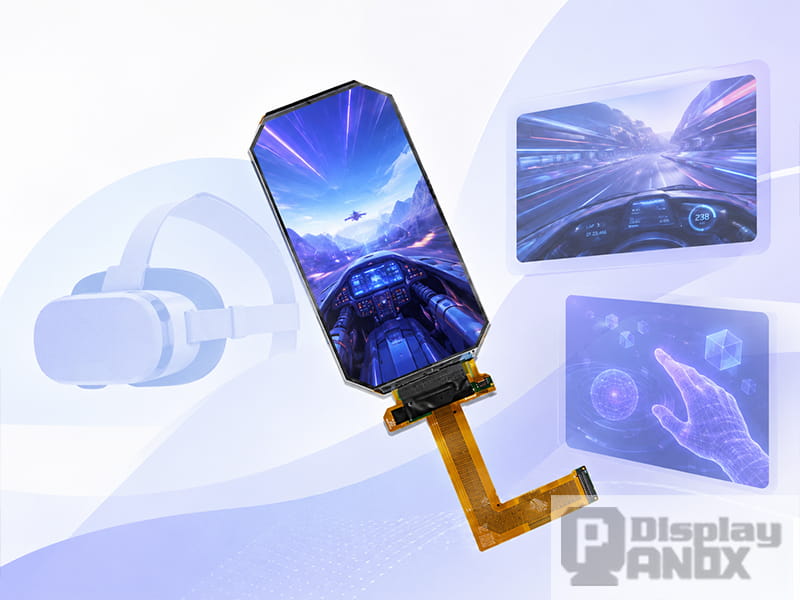
Panox Display provides high refresh rate display panels for customers developing compact visual devices, especially in VR, AR, near-eye display, handheld, and embedded display applications.
For VR projects, Panox Display offers small high-PPI TFT-LCD and OLED display panels such as 2.9 inch 120Hz VR TFT-LCD, 2.9 inch 2K 90Hz LCD for VR, 3.5 inch 90Hz LCD for VR, and 3.81 inch OLED 90Hz for VR. These panels are suitable for headset prototypes, immersive display modules, and optical evaluation projects.
For near-eye and optical systems, Panox Display offers Micro OLED display modules such as 0.5 inch 1600x1200 Micro OLED with up to 120Hz frame rate. This type of panel is suitable for AR, EVF, thermal imaging, sighting systems, and head-mounted displays where compact size and high pixel density are essential.
For larger compact devices, Panox Display can also support AMOLED and LCD display panels such as 7 inch AMOLED 1920x1080 MIPI panels for portable devices, monitor-like products, and embedded visual systems.
Beyond panel supply, Panox Display can support controller boards, MIPI driving solutions, HDMI/Type-C boards, connectors, cover glass, touch panels, and custom display integration. This support is important for high refresh rate applications because the display must be driven correctly to reach its intended performance.
13. Design Considerations Before Using a High Refresh Rate Panel
Before selecting a high refresh rate display panel, engineers should confirm how the display will be used in the real device. The first step is to define the content type. Static UI, dynamic UI, video playback, camera preview, VR rendering, and high-speed simulation all have different refresh rate needs.The second step is to check the system pipeline. The host processor, GPU, display interface, driver IC, firmware, and power system must all support the target refresh rate. A 120Hz panel will not deliver a 120Hz experience if the content is rendered at 60fps or if the interface bandwidth is insufficient.
The third step is to evaluate the visual result. Refresh rate should be checked together with response time, motion blur, brightness, flicker, frame stability, and thermal behavior. For VR and AR, optical testing is also necessary because the lenses or waveguides can change the final visual experience.
The fourth step is to consider long-term production needs. Availability, customization options, controller board support, documentation, and sample testing can affect the success of the project as much as the panel specification itself.
Conclusion
High refresh rate display panels are used wherever motion, interaction, and real-time visual feedback matter. They improve the experience of high refresh rate monitors, but their importance is even stronger in VR headsets, AR optical engines, FPV devices, handheld terminals, simulation systems, medical training, industrial control, and professional visualization equipment.The best high refresh rate panel is application-dependent. A VR headset may need a 90Hz or 120Hz high-PPI panel. An AR optical engine may require a compact Micro OLED with high pixel density and stable refresh performance. A handheld device may benefit from a balanced AMOLED or LCD panel with smooth touch interaction and manageable power consumption.
Panox Display provides LCD, OLED, AMOLED, and Micro OLED panels for high refresh rate applications, along with display driving and customization support. For product developers, the goal is to choose a panel that fits the whole system: display technology, refresh rate, resolution, interface, optical design, power, and user experience.
Learn more: Why Is High Refresh Rate Important for Display Panels?