
Specialist LCD/OLED Supplier
|
|








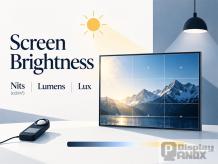
LCD Screen Brightness Explained: Nits vs cd/m², Lumens, Lux, and How to Measure It
A display specification may state that an LCD panel has a brightness of 350 nits. But what does that number actually mean? Is it the same as 350 cd/m², and how does it compare with lumens or lux? These questions frequently arise during LCD module selection, produ
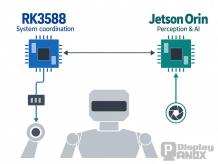
RK3588 vs Jetson Orin: Why Robots Separate Motion Control from AI
Motors, joints, cameras, and dexterous hands attract most of the attention in robot development. Inside the machine, however, the robot control board determines how those components work together—and whether the system can respond consistently while processing demanding AI w
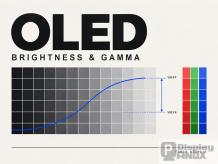
OLED Gamma Calibration: VREF, VREFP and VREFN Explained
Two OLED displays can have the same resolution and rated brightness yet produce noticeably different images. One may show smooth shadow transitions, while another loses dark detail or develops a color tint at low brightness. These differences can arise from the reference voltages,

Why RK3588 Is Becoming a Popular Robot Controller for Flexible OLED Displays and Edge AI
Robotics development is moving beyond motors, reducers, cameras, and lidar. These components may define what a robot can sense and how it can move, but they do not work independently. A robot also needs a central computing platform capable of coordinating motion, processing vis
MIPI DSI Display Bring-Up Guide: Lane Rate Calculation, Panel Initialization, Packet Format, and Troubleshooting
MIPI DSI display bring-up is often described as a register-configuration task. In practice, it is a chain of engineering decisions that begins with the panel specification and ends only when the display produces a stable image across temperature, voltage, startup, suspend, and res
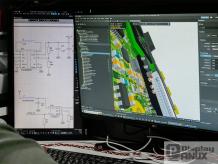
Rockchip DRM/KMS Display Driver Guide: VOP2, Device Tree, Atomic Modesetting, and Black Screen Debugging
Rockchip display bring-up is not the work of a single “screen driver.” A working display depends on an end-to-end path that includes image generation, memory buffers, VOP or VOP2 scanout, a display interface controller, the PHY, power sequencing, and the panel or monitor it
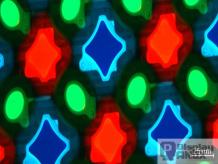
Why Blue OLED Subpixels Age Faster: OLED Lifespan, Burn-In, and Degradation Explained
OLED displays are known for deep blacks, high contrast, wide viewing angles, fast response times, and thin form factors. These advantages have made OLED a core display technology for smartphones, wearables, automotive systems, industrial equipment, televisions, and near-eye de
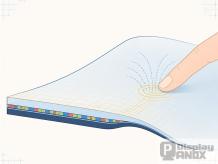
Why On-Cell Touch Is Mainstream in OLED Displays
OLED displays are naturally thin, lightweight and capable of supporting curved, foldable and rollable designs. Touch input, however, adds another functional system to the display stack. The location of the touch sensor affects the total module thickness, optical performance, b
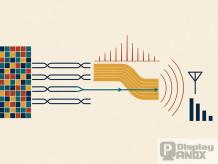
MIPI DSI RF Interference: Why Phone Signal Can Drop When the Screen Turns On
A still image looks electrically quiet. Inside a phone, however, displaying it may require a high-speed link to stream pixel data continuously. Under the wrong system conditions, MIPI DSI RF interference can occur when emissions from the DSI/D-PHY link overlap a receive
Panox Display

Browse Articles by Category
OEM SERVICE
Customized Touch Panel

HDMI/Type-C Controller/Driver Board

Custmized LCD/OLED

Free Connectors

Find a Display to Fit Your Application

For More OLED/LCD Panels
If our display fit your application, subscrlbe for monthly Insights
Panox Display Professional OLED/LCD Supplier and Manufacturer
- 📍 Shenzhen
- 📞 Phone: 86 755 3396 6409
- 📠 Skype: panoxwesley

If it`s urgent, try to contact
Whatsapp: +86 18665870665
Skype: panoxwesley
QQ: 407417798