
Specialist LCD/OLED Supplier
|
|








What Makes Samsung TFT LCD Displays Unique?
Samsung TFT LCD displays utilize Thin-Film Transistor technology to control pixels individually, providing sharp image quality and reliable performance in various devices. While largely replaced by OLED in premium products, Samsung’s TFT LCDs remain popular in monitors, tablets, and affordabl
How Do You Connect and Use a TFT LCD with Arduino?
Connecting a TFT LCD to an Arduino involves selecting the right display, wiring it correctly, and programming it with libraries like Adafruit GFX for rich graphics. This combination enables clear, colorful interfaces for a wide range of Arduino projects, from simple displays to interactive touchscr
What Makes TFT LCD Displays Essential in Modern Tech?
TFT LCDs use thin-film transistor technology to independently control each pixel, producing sharp images with fast response times and accurate colors. Their balance of quality, cost-effectiveness, and versatility makes them essential in devices ranging from smartphones to industrial systems. A
Which Is Better: TFT LCD vs OLED Displays?
TFT LCD and OLED represent two distinct screen technologies with key differences in light emission, contrast, power consumption, and flexibility. TFT LCDs are bright, durable, and cost-effective with long lifespans, ideal for outdoor and industrial use. OLEDs provide superior color, contrast, slimn
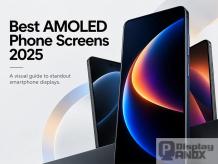
Which AMOLED Display Phones Offer the Best Screens in 2025?
AMOLED display phones deliver stunning visuals with deep blacks, vibrant colors, and smooth motion thanks to high refresh rates. In 2025, brands like Samsung, Apple, and Google lead the market with top-tier AMOLED devices suited for media, gaming, and everyday use. Also check: Flexib
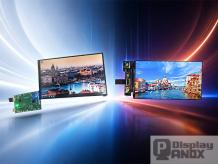
Which Display Is Better: TFT LCD or AMOLED?
TFT LCD and AMOLED differ significantly in how they produce light, impacting image quality, power use, and cost. TFT LCD uses a backlight to illuminate pixels, while AMOLED pixels emit their own light, resulting in superior contrast and energy savings for dark content. &n
What Are the Key Differences Between TFT LCD and IPS Displays?
TFT LCD refers to a broad category of displays that include various panel technologies, while IPS is a type of TFT LCD known for superior color accuracy and wide viewing angles. Choosing between TFT LCD (often TN variant) and IPS depends on your needs for color quality, response time, viewing angle
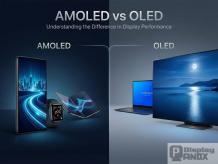
What Are the Key Differences Between AMOLED vs OLED Displays?
AMOLED is OLED with an active-matrix TFT backplane that controls pixels individually, enabling higher refresh rates, faster response, and better power efficiency than passive-matrix OLED.
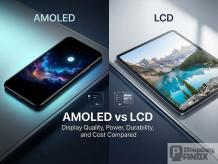
Which Is Better: AMOLED or LCD Display Technology?
This article compares AMOLED and LCD displays, highlighting AMOLED's vibrant colors and deep blacks versus LCD's true-to-life colors and cost efficiency. It also introduces Panox Display as a reliable OEM supplier for both display technologies.
Panox Display

Browse Articles by Category
OEM SERVICE
Customized Touch Panel

HDMI/Type-C Controller/Driver Board

Custmized LCD/OLED

Free Connectors

Find a Display to Fit Your Application

For More OLED/LCD Panels
If our display fit your application, subscrlbe for monthly Insights
Panox Display Professional OLED/LCD Supplier and Manufacturer
- 📍 Shenzhen
- 📞 Phone: 86 755 3396 6409
- 📠 Skype: panoxwesley

If it`s urgent, try to contact
Whatsapp: +86 18665870665
Skype: panoxwesley
QQ: 407417798